
Indian Art
Kangra Painting: History, Features and How to Recognise the Style

Oct
In short: Kangra painting is the most lyrical school of Pahari (hill) miniature painting, from the former Kangra state in today’s Himachal Pradesh. It grew out of the Guler workshops in the mid 18th century, reached its peak under Raja Sansar Chand (ruled 1775 to 1823), and is loved for cool colours, graceful figures and soft green landscapes. Its favourite subject is the love of Radha and Krishna. Kangra painting received a Geographical Indication (GI) tag in 2012.
If Basohli painting is a shout, Kangra is a whisper. The colours are cooler, the lines thinner, the faces gentler, and the landscape, almost absent in earlier hill painting, suddenly opens up into rivers, flowering trees and rolling hills. Many people who say they love “Indian miniatures” are really picturing Kangra without knowing the name. Here is how to recognise it, where it came from and what to look for if you want one at home.
How to recognise a Kangra painting
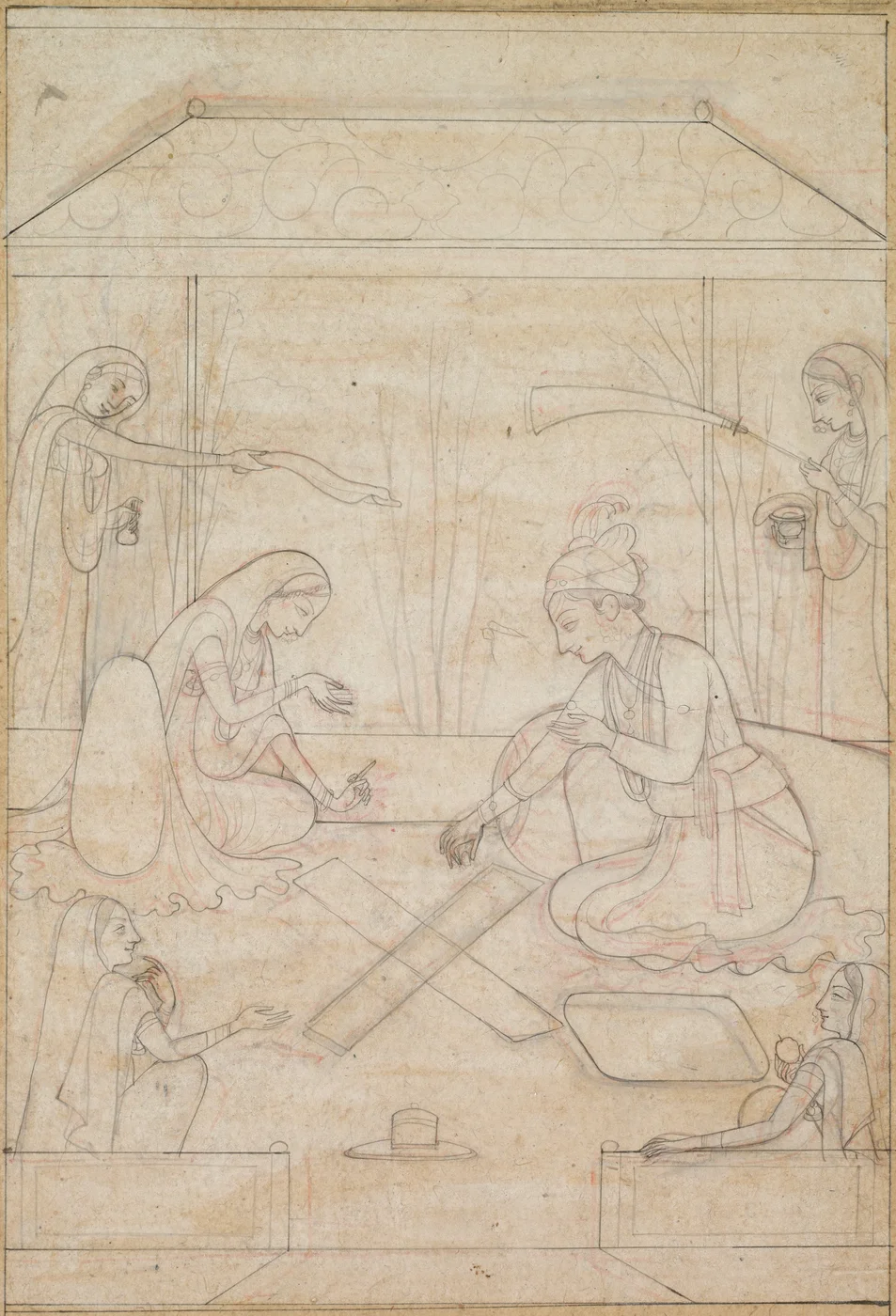
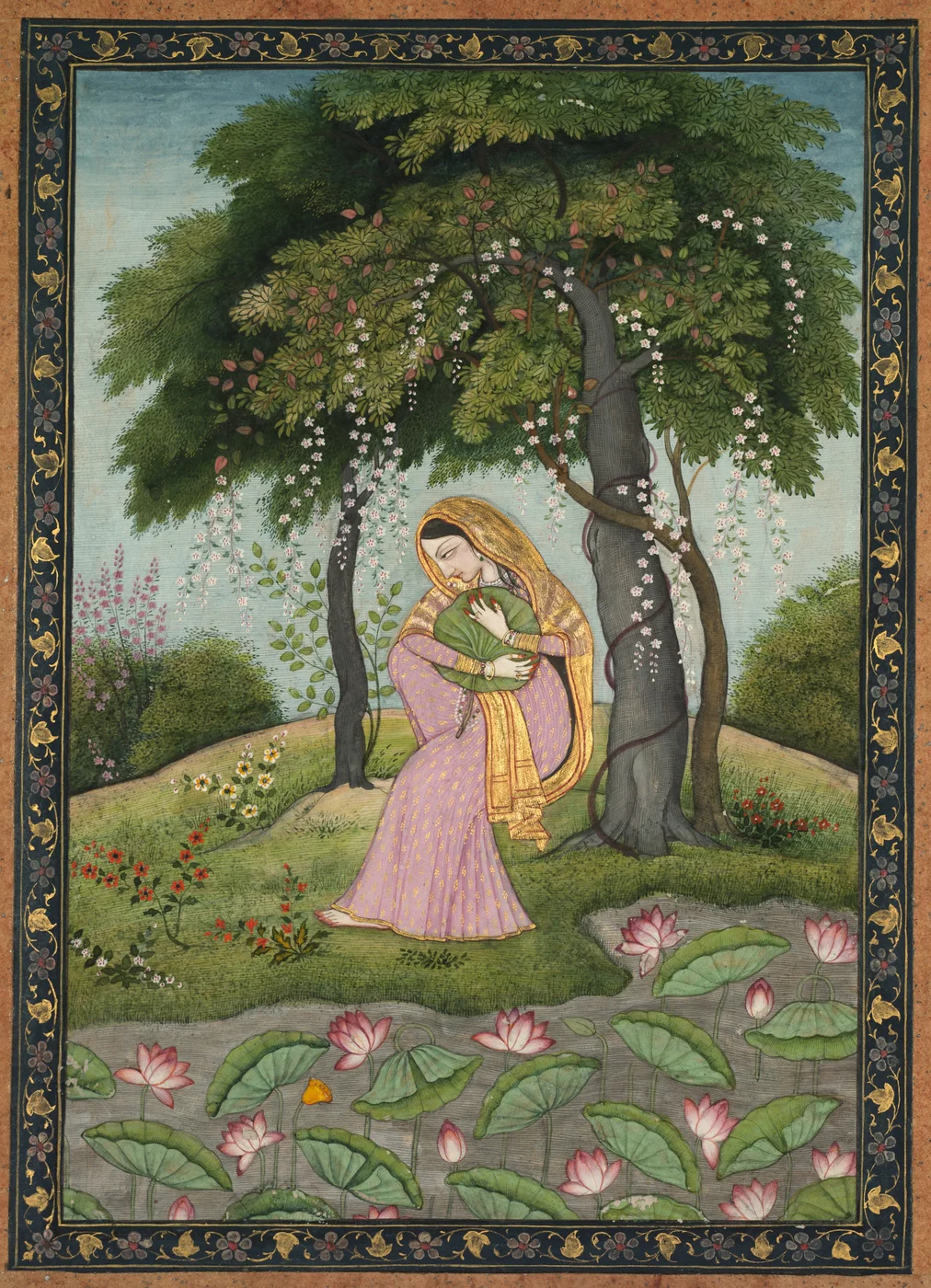
- Cool, clear colour. Leaf greens, powder blues, soft pinks and ivory, with touches of gold. Even night scenes feel calm.
- Slender, graceful figures. Women have long necks, delicate oval faces and long, narrow eyes; men stand tall and relaxed. The ideal of feminine beauty in Kangra painting is famous in its own right.
- Real landscape. Rivers wind into the distance, trees are painted leaf by leaf, hills fade into the sky. Nature often mirrors the mood of the lovers.
- Fine, flowing line. Outlines are thin and confident, closer to drawing than to the bold contours of Basohli.
- A quiet, romantic mood. Even dramatic stories are told with restraint.
From Guler to Kangra: how the style was born
Kangra painting did not begin in Kangra. Its roots lie in the neighbouring hill state of Guler, where a family of painters descended from Pandit Seu worked for the local court. Seu’s sons, Manaku and Nainsukh, became two of the greatest painters in Indian history. Nainsukh in particular absorbed the naturalism of Mughal painting, its careful observation of people, animals and space, and blended it with the devotional themes of the hills.

According to the Kangra district administration’s account, the style took shape at Haripur-Guler under Raja Govardhan Chand (1744 to 1773), who gave shelter to artists trained in the Mughal manner at a time when the plains were unsettled by invasions. The next generation of the family, the sons and nephews of Manaku and Nainsukh, carried this refined style across the hills. As the earlier, fiery Basohli style faded in the mid 18th century, this new manner took its place.
Sansar Chand and the golden age
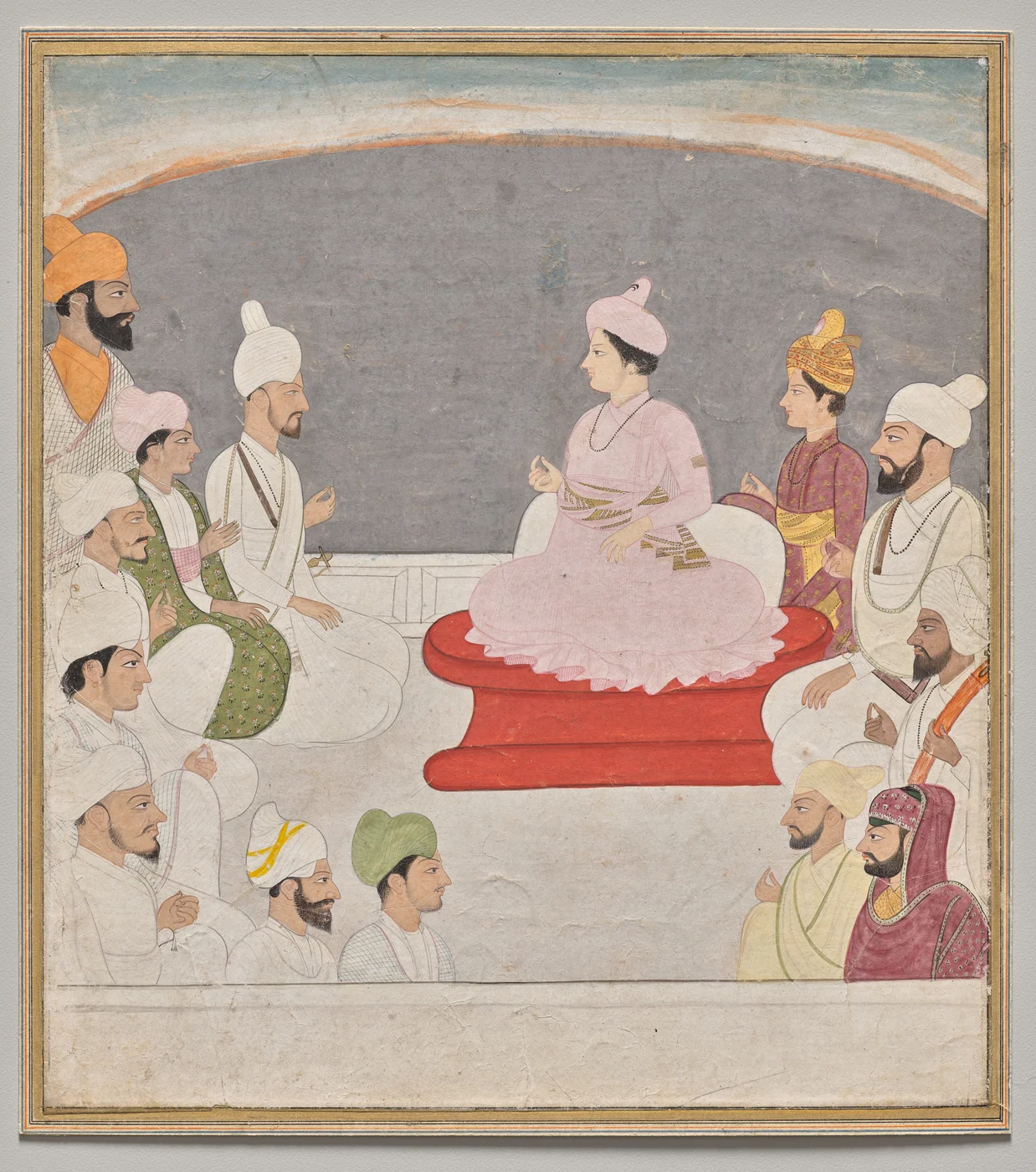
The style is named after Kangra because of one patron: Raja Sansar Chand (1765 to 1823), who ruled Kangra from 1775 to 1823. He was a passionate collector who kept painters close to his court, and under him Kangra became the most important centre of Pahari painting. A portrait in the Cleveland Museum of Art shows him at about 18, around 1783, beardless, with curly hair under a pink turban; the museum suggests it may mark the year the Mughals gave up control of Kangra fort. Painters such as Purkhu worked as his portraitists.
The golden age did not last. After the Sikh occupation of Kangra in the early 19th century, many hill artists moved to the court of Maharaja Ranjit Singh in Lahore, where they helped shape a new Sikh style of painting. Kangra-style painting continued in smaller workshops through the 19th century.
What Kangra artists painted
Radha and Krishna
Above all, Kangra painters illustrated the love of Radha and Krishna, drawing on Jayadeva’s Gita Govinda and the Bhagavata Purana. Large, famous sets of both texts were painted in the late 18th century. If you want to understand the scenes, our guide to choosing a Radha Krishna painting for home explains the most common ones.
Heroines in love
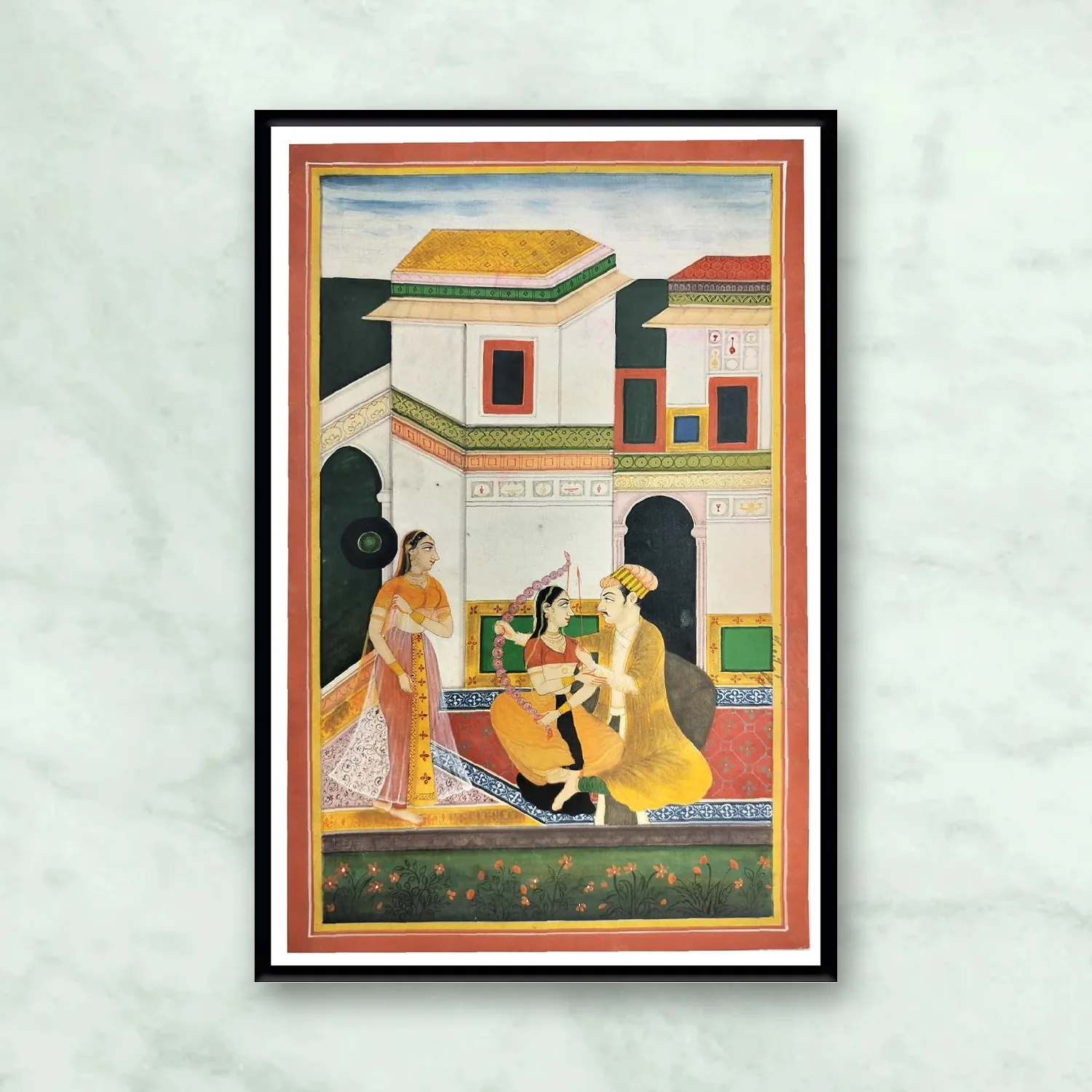
Kangra artists loved the nayika, the heroine of Hindi and Sanskrit love poetry, drawing on poets such as Keshavdas and Bihari. You will see her waiting by a door at night, dressing for a meeting, quarrelling, or pining for an absent lover (the virahini nayika). These paintings are small studies of emotion.
The Baramasa: twelve months of love
The Baramasa (“twelve months”) shows how love changes with the seasons, from spring blossoms to the dark clouds of the monsoon. Our Baramasa Sawan Month painting shows the month of Sawan, with Radha asking Krishna to stay close as the monsoon clouds gather.
Gods, epics and court life
Shiva and Parvati in the Himalaya, scenes from the Ramayana, and portraits of rulers and their courts also appear often. Our Shiv Parvati Kangra painting and Ram Sita in Kangra style are contemporary examples.
A closer look: Krishna lifting Mount Govardhan
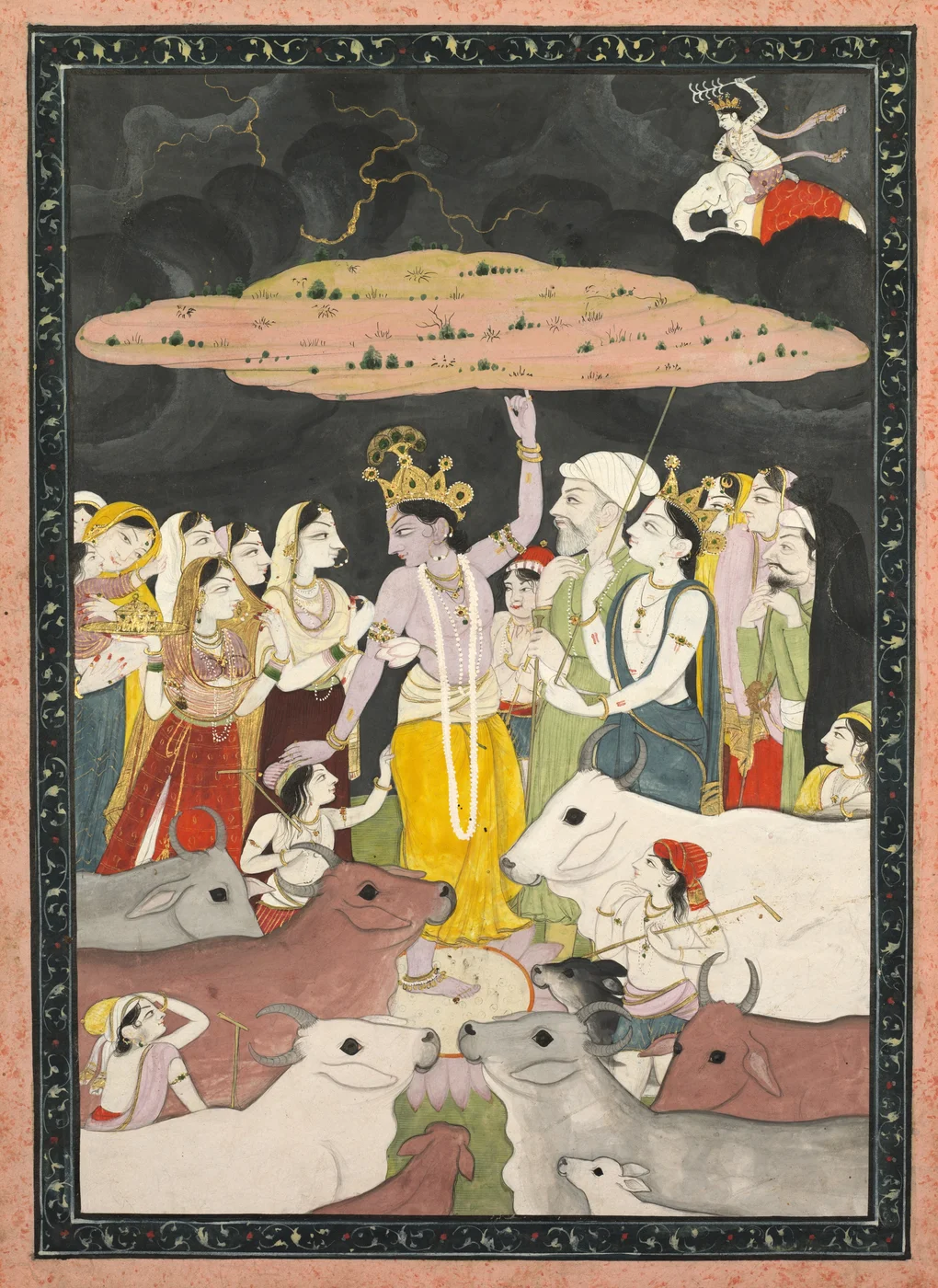
A painting of about 1780 to 1790 in the Cleveland Museum of Art shows everything Kangra does well. Krishna holds up the whole of Mount Govardhan on his little finger to shelter the cowherds from a storm sent by the god Indra, who rides his white elephant in the sky. Yet the drama is calm: Krishna gazes at Radha and pats a child on the head, his brother Balarama props the mountain with a staff, and the cows press close for safety. A miracle, painted as a tender family moment. That balance of story and feeling is the heart of the Kangra style.
How a Kangra painting is made
Kangra painters used the same careful methods as other Indian miniature traditions. The painting is made on smooth handmade paper built up from thin layers and burnished so that it takes very fine lines. Colours are ground from minerals and plants and bound with gum, and gold is used for jewellery, borders and highlights. The drawing is laid in first, often in a light red line, then filled with thin layers of colour, with faces and eyes finished last with the finest brushes. The cool greens of Kangra landscapes take many thin washes, which is one reason a good Kangra miniature can take weeks. Read more in our guide to how Indian miniatures are made.
Kangra, Basohli and Rajasthani painting compared
| Kangra | Basohli | Rajasthani (e.g. Mewar) | |
|---|---|---|---|
| Region | Himachal Pradesh hills | Jammu hills | Rajasthan plains |
| Peak | Late 18th century | Late 17th to mid 18th century | 17th to 19th century |
| Colour | Cool, soft, natural | Hot primaries, flat grounds | Bold, warm, saturated |
| Space | Deep landscapes | Flat, compartment-like | Flat to moderate depth |
| Mood | Lyrical and romantic | Intense and dramatic | Courtly, devotional, festive |
For more on the hill schools see our guide to Pahari painting, and for the plains, our guide to Rajasthani painting schools.
Kangra painting today
Kangra painting was registered as a Geographical Indication on 2 April 2012, recognising it as a tradition tied to the region. The Kangra Art Museum in Dharamshala holds historical works, and many fine examples are in museums worldwide. Contemporary artists still paint in the Kangra manner, copying classic compositions or creating new ones with traditional stone colours on handmade paper.
Bringing a Kangra painting home
Because the palette is soft, Kangra paintings sit comfortably in most rooms, and they are a natural choice for bedrooms, studies and calm living rooms. Frame them with an ivory or pale mount and a thin frame so the delicate colours are not overwhelmed, keep them out of direct sunlight, and hang them where people can look closely.

Browse our hand-painted Kangra paintings, painted in stone colours on handmade paper. Some favourites: the Radha Krishna Kangra painting, Shakuntala in Kangra style, the Ragini Kangra miniature and the Lord Ganesh painting in Kangra style. To place Kangra among India’s other traditions, read our guide to Indian miniature painting.
Frequently asked questions
Kangra painting is a school of Pahari miniature painting from the former Kangra state in Himachal Pradesh, known for cool colours, graceful figures, natural landscapes and themes of Radha and Krishna.
Himachal Pradesh. It is named after the former princely state of Kangra in the western Himalaya.
Its greatest patron was Raja Sansar Chand, who ruled Kangra from 1775 to 1823. The style itself grew out of the Guler workshops under Raja Govardhan Chand.
The love of Radha and Krishna, from the Gita Govinda and Bhagavata Purana, along with heroines of love poetry, the Baramasa (twelve months), and scenes of gods and courts.
The family of Pandit Seu of Guler, especially his sons Manaku and Nainsukh and their descendants, shaped the style. Purkhu was a leading painter at Sansar Chand’s court.
Basohli is earlier, bolder and flatter, with hot colours and intense emotion. Kangra uses cool colours, deep landscapes and delicate, lyrical figures.
Yes. Kangra painting was registered as a Geographical Indication on 2 April 2012.
