
Indian Art
Rajasthani Paintings: Mewar, Bundi, Kota, Kishangarh and Marwar Schools

Oct
Quick answer: Rajasthani painting is the miniature painting of the Rajput courts of Rajasthan, from the 16th to the 19th century. Its main schools are Mewar, Bundi, Kota, Kishangarh, Marwar (Jodhpur and Bikaner), Jaipur and Nathdwara. Each has its own faces, colours and favourite subjects, but all share vivid colour and devotional, courtly themes.
What is Rajasthani painting?
As Rajput kingdoms flourished, each court supported its own painters. They illustrated poetry, music and religious texts, especially stories of Krishna, and portrayed their rulers in hunts, processions and celebrations. Over time Mughal techniques also reached many Rajput courts, but Rajasthani painting kept its bolder colour and stronger emotion.

The main schools of Rajasthani painting
Mewar (Udaipur)
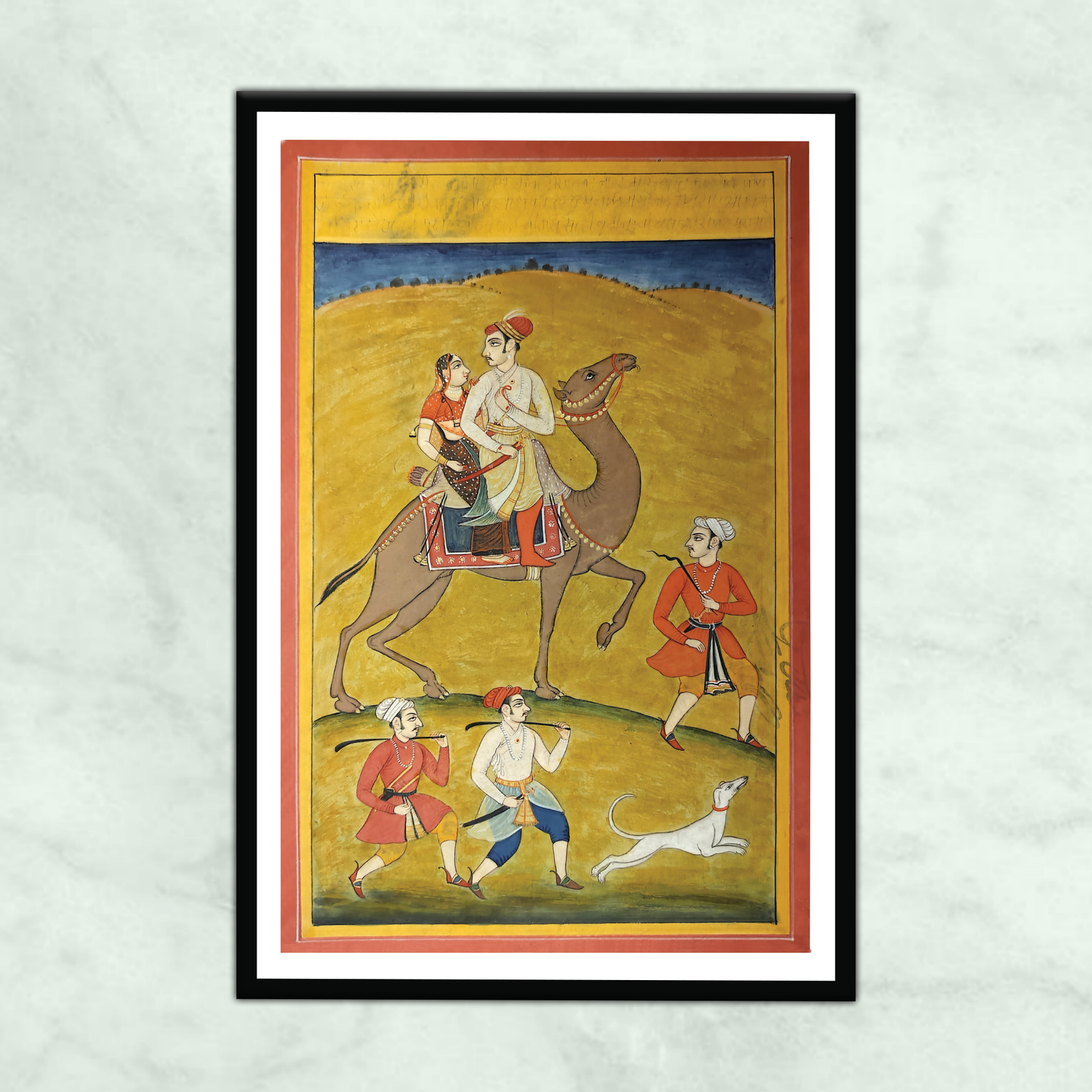
One of the oldest schools, Mewar is known for bold colours, strong outlines and lively compositions, from ragamala (musical mode) sets to royal portraits. See the Maru Ragini Mewar painting and the portrait of Thakur Biramdevji.
Bundi
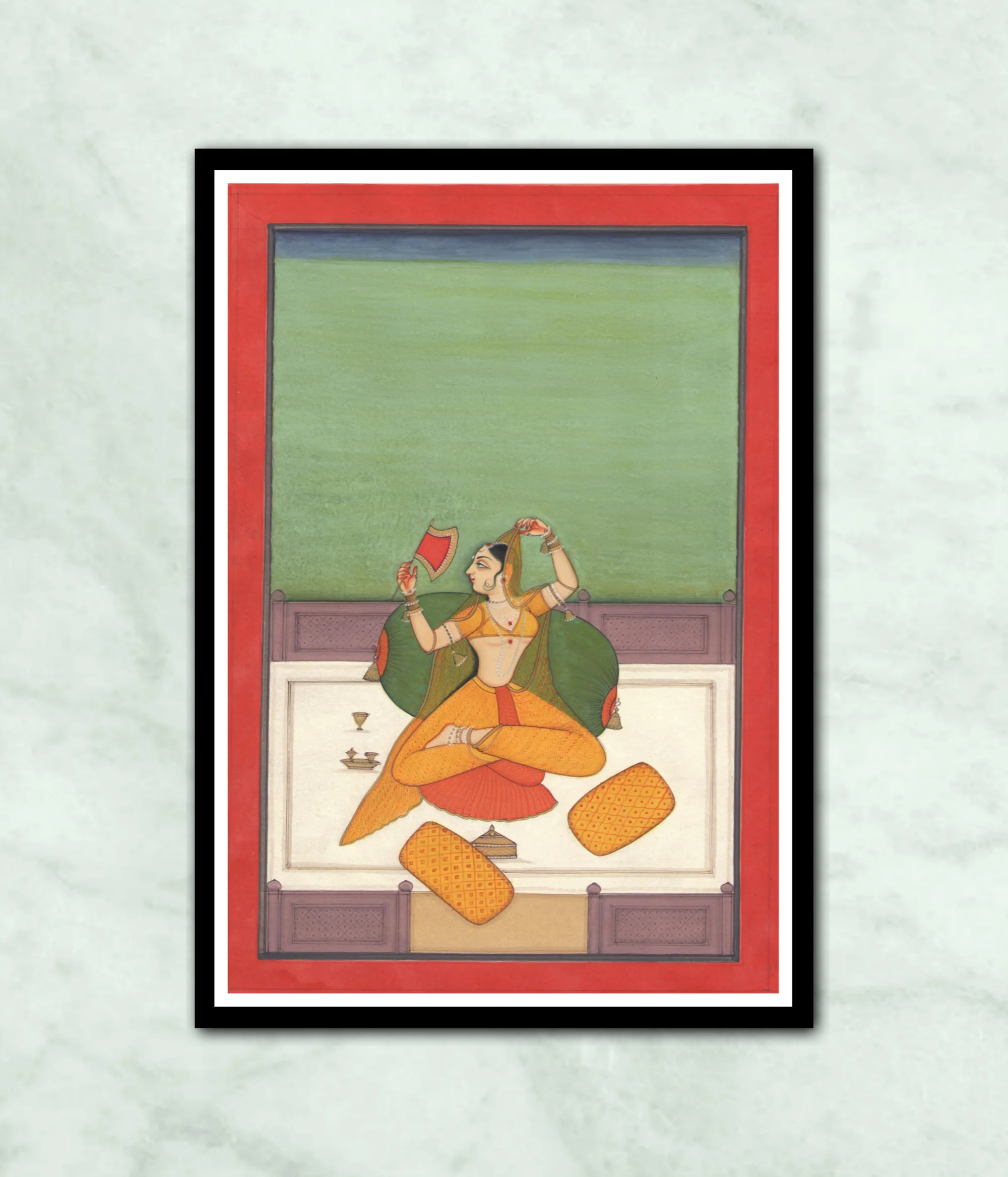
Bundi painting is loved for lush green landscapes, flowering trees, monsoon skies and graceful women in gardens. See The Art of Bundi miniature painting.
Kota
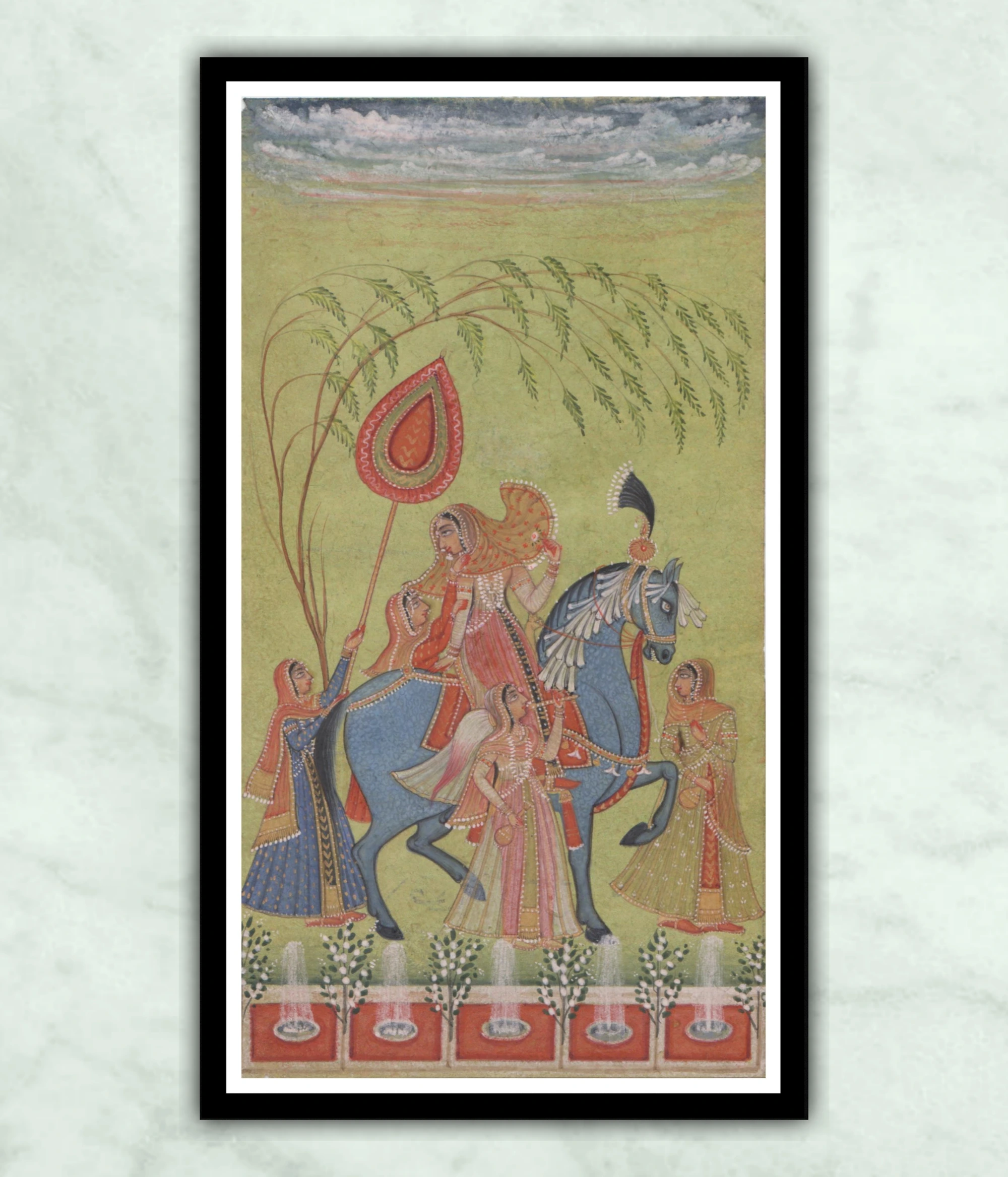
Closely related to Bundi, the Kota school is famous for dramatic hunting scenes, elephants and dense jungles painted with great energy, like the Kota three elephants, Rao Ram Singh hunting a rhinoceros and a lady riding a blue roan.

Kishangarh
Kishangarh is the most elegant Rajasthani school, with elongated faces, lotus-shaped eyes and dreamy lake landscapes. Its icon is the Bani Thani. See Radha Krishna eternal lovers in Kishangarh style.

Marwar (Jodhpur and Bikaner)
Marwar painting has vigorous lines, striking colour contrasts and proud royal portraits, while Bikaner shows strong Mughal refinement. See the Jodhpur Marwar shaili portrait.

Jaipur and Nathdwara
The Jaipur (Amber) school produced large portraits and Krishna themes, while Nathdwara grew around the Shrinathji temple, famous for devotional Krishna paintings and pichwai cloth paintings. Explore Nathdwara paintings.
Rajasthani schools compared
| School | Known for | Look for |
|---|---|---|
| Mewar | Ragamala, royal life | Bold red and yellow, strong outlines |
| Bundi | Gardens, monsoon, romance | Lush greens, flowering trees |
| Kota | Hunting scenes | Elephants, tigers, dense jungle |
| Kishangarh | Radha Krishna, Bani Thani | Elongated faces, lotus eyes |
| Marwar | Royal portraits | Vigorous lines, bold contrast |
| Nathdwara | Shrinathji, Krishna | Gold, lotus, cows and festivals |
Favourite themes in Rajasthani painting

- Krishna and Radha, such as Krishna fluting for the gopis. Browse Radha Krishna paintings.
- Ragamala, paintings of musical modes, like Maru Ragini.
- Kings and courts, from portraits to processions, such as the Raja Bhoj painting.
- Hunts and animals, especially in Kota and Bundi.
Compare Rajasthani art with the hill schools in our Pahari painting guide and with court art in our Mughal miniature painting guide. For folk art from the same state, read our Phad painting guide.
Buying a hand-painted Rajasthani painting
Look for fine, hand-drawn lines in faces, jewellery and borders, traditional stone colours and, on many pieces, real gold. Small works suit reading corners and gifts; larger court and hunting scenes make a statement in living rooms. Explore all our hand-painted Rajasthani paintings.
A short history of Rajasthani painting
Before the Mughals, western India had a strong tradition of manuscript painting with flat colours and bold outlines, seen in Jain manuscripts and early devotional books. From the 16th century, Rajput courts began to employ their own painters. Contact with the Mughal court brought new techniques, finer brushwork and more naturalistic portraits, but each Rajput court adapted these ideas in its own way. The 17th and 18th centuries were the golden age, when every major court in Rajasthan had a recognisable style.
Ragamala: painting music
One of the most beautiful themes in Rajasthani art is the ragamala, a “garland of ragas”. Each painting gives visual form to a musical mode, its mood, time of day and season, often through a scene of lovers, devotees or royal figures. Maru Ragini, for example, is usually shown as the lovers Dhola and Maru riding a camel through the desert. Mewar and Bundi painters produced some of the finest ragamala sets.
More about the schools
Bikaner
Bikaner painting, part of the wider Marwar group, is the most Mughal-influenced Rajasthani style, with delicate lines, subtle colours and refined detail. Its painters, often from the Usta families, also excelled at decorative work.
Jaipur (Amber)
Jaipur’s painters produced large royal portraits, Krishna themes and court scenes, with bright colours and confident figures. The city remains a major centre of miniature painting today.
Mewar beyond Udaipur
Mewar’s influence spread to smaller centres such as Nathdwara and Deogarh, each with its own variations. Mewar painters also documented court festivals, processions and hunts in large, detailed compositions.
Materials and techniques
- Paper: handmade paper, layered and burnished to a smooth surface.
- Colours: natural stone and mineral pigments ground by hand, giving deep, lasting colour.
- Brushes: very fine brushes for faces, jewellery and borders.
- Gold: real gold for ornaments, architecture and decorative borders on many works.
- Burnishing: the finished surface is polished to a soft sheen.
Where to see Rajasthani paintings
Many palaces in Rajasthan still hold painting collections and murals. Notable places include the City Palace Museum in Udaipur, the Mehrangarh Fort Museum in Jodhpur, the Albert Hall Museum in Jaipur and the famous painted Chitrashala in Bundi’s Garh Palace. The National Museum in New Delhi and international museums also hold major works.
Rajasthani paintings for your home
- Living room: a royal procession, court scene or Kota hunt makes a striking centrepiece.
- Bedroom: romantic Kishangarh or Bundi scenes of Radha and Krishna create a calm mood.
- Pooja room: Nathdwara and Krishna paintings suit devotional spaces.
- Gallery wall: combine small miniatures from different schools in matching frames.
For placement ideas, see our guides to Vastu approved paintings and the best paintings for your living room.
Caring for a Rajasthani miniature
Frame your painting behind glass with an acid-free mount, hang it away from direct sunlight and damp walls, and dust only the frame with a soft dry cloth. Never touch the painted surface, especially gold areas, which can be delicate.
Timeline of Rajasthani painting
| Period | Milestone |
|---|---|
| Before the 16th century | Western Indian manuscript painting, including Jain manuscripts, sets the foundation of bold line and flat colour. |
| 16th century | Rajput courts begin to employ their own painters and early Mewar painting develops. |
| 17th century | Mewar, Bundi and Kota flourish, with famous ragamala sets and court scenes; Mughal techniques spread to Rajput courts. |
| 18th century | The golden age: Kishangarh creates Bani Thani, Kota excels in hunting scenes, and Jaipur, Jodhpur and Bikaner develop strong styles. |
| 19th century to today | Nathdwara and Jaipur remain active centres, and traditional artists continue the schools with hand-painted works. |
Glossary of Rajasthani painting terms
- Shaili: a style or school of painting, such as Mewar shaili or Kishangarh shaili.
- Ragamala: a set of paintings illustrating musical modes and their moods.
- Pichwai: a large painted cloth hung behind the image of Shrinathji at Nathdwara.
- Chitrashala: a painted gallery or hall, like the famous one in Bundi’s Garh Palace.
- Stone colours: mineral pigments ground by hand for rich, lasting colour.
- Burnishing: polishing a painting with a smooth stone to give it a soft sheen.
Krishna in Rajasthani painting
Krishna is the single most popular subject in Rajasthani art. Devotional movements that celebrated Krishna’s love and playfulness were strong in Rajasthan, and painters showed every part of his story: the mischievous child stealing butter, the cowherd playing the flute for the cows and gopis, the Raas Leela dance in the moonlit forest, and the divine love of Radha and Krishna.
Each school pictured Krishna in its own way. Mewar painters filled pages with lively, colourful scenes; Bundi and Kota set him in lush gardens and forests; Kishangarh made Radha and Krishna tall, graceful and idealised; and Nathdwara painted him as Shrinathji, the child form worshipped in the town’s temple, surrounded by cows, lotuses and festival decorations.
Krishna paintings are also among the most loved choices for homes, as symbols of love, joy and devotion. Explore our Radha Krishna paintings in Rajasthani, Kangra, Basohli and Kishangarh styles, and see our Vastu guide for where to place them.
Frequently asked questions
Mewar, Bundi, Kota, Kishangarh, Marwar (Jodhpur and Bikaner), Jaipur and Nathdwara.
Mewar is generally considered one of the oldest Rajasthani schools of miniature painting.
Bani Thani from the Kishangarh school is the most famous, often called the Mona Lisa of India.
Mughal painting is more naturalistic and courtly, with subtle colour; Rajasthani painting is bolder, more colourful and more devotional, especially in Krishna themes.
Yes. Phad is Rajasthan’s folk scroll painting tradition, distinct from the court miniature schools.
Ragamala paintings give visual form to musical modes, showing each raga’s mood, season and time of day through scenes of lovers, devotees or royals.
Visit the City Palace Museum in Udaipur, Mehrangarh Fort Museum in Jodhpur, Albert Hall Museum in Jaipur and the painted Chitrashala in Bundi’s Garh Palace.
Court scenes, royal processions and Kota hunting scenes make bold centrepieces, while Kishangarh and Bundi Radha Krishna scenes create a calm, romantic mood.
