
 Indian Miniature
 Painting Styles
 Modern Art
 Portraits & Gifts
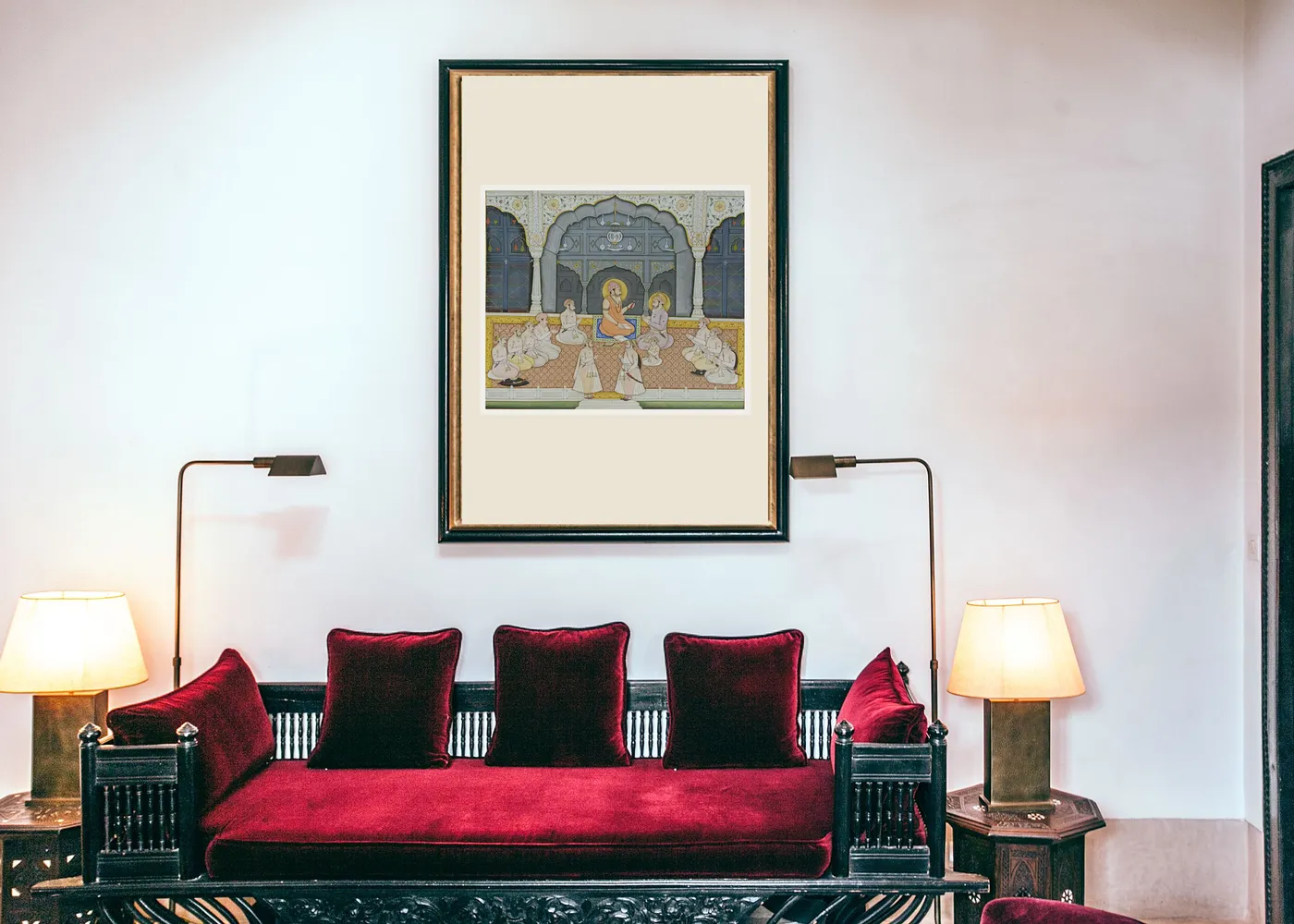


In short: A Ram Sita painting shows Lord Rama and Sita, usually enthroned together, in exile in the forest with Lakshmana, or at their wedding. It is a favourite image of devotion, loyalty and a happy marriage, and is especially meaningful around Vivah Panchami, Diwali and Ram Navami. Choose an enthroned scene for a pooja room, a gentle forest or wedding scene for a living room, and hang it at eye level on a clean wall.
Few images are as dear to Indian families as Rama and Sita seated together. Their story, told in the Ramayana, is about duty, love and faith tested by long separation. Painters have returned to it for centuries, from palace workshops in the Himalayan foothills to the bazaars of Kolkata. If you are choosing a Ram Sita painting for your home or as a wedding gift, it helps to know which scene you are looking at and what it says.
Vivah Panchami: the wedding of Rama and Sita
Vivah Panchami celebrates the marriage of Rama and Sita, and it is observed on the fifth day of the bright fortnight in the month of Margashirsha, usually in November or December. It is marked with special devotion in Ayodhya and in Janakpur in Nepal, which tradition holds to be Sita’s home. In the Ramayana, Sita, the adopted daughter of King Janaka, chooses Rama as her husband at her svayamvara, after he strings and breaks the great bow of Shiva. For many families this is a lovely time to bring a Ram Sita painting home, or to give one to a young couple.

The main scenes in Ram Sita paintings
Rama and Sita enthroned
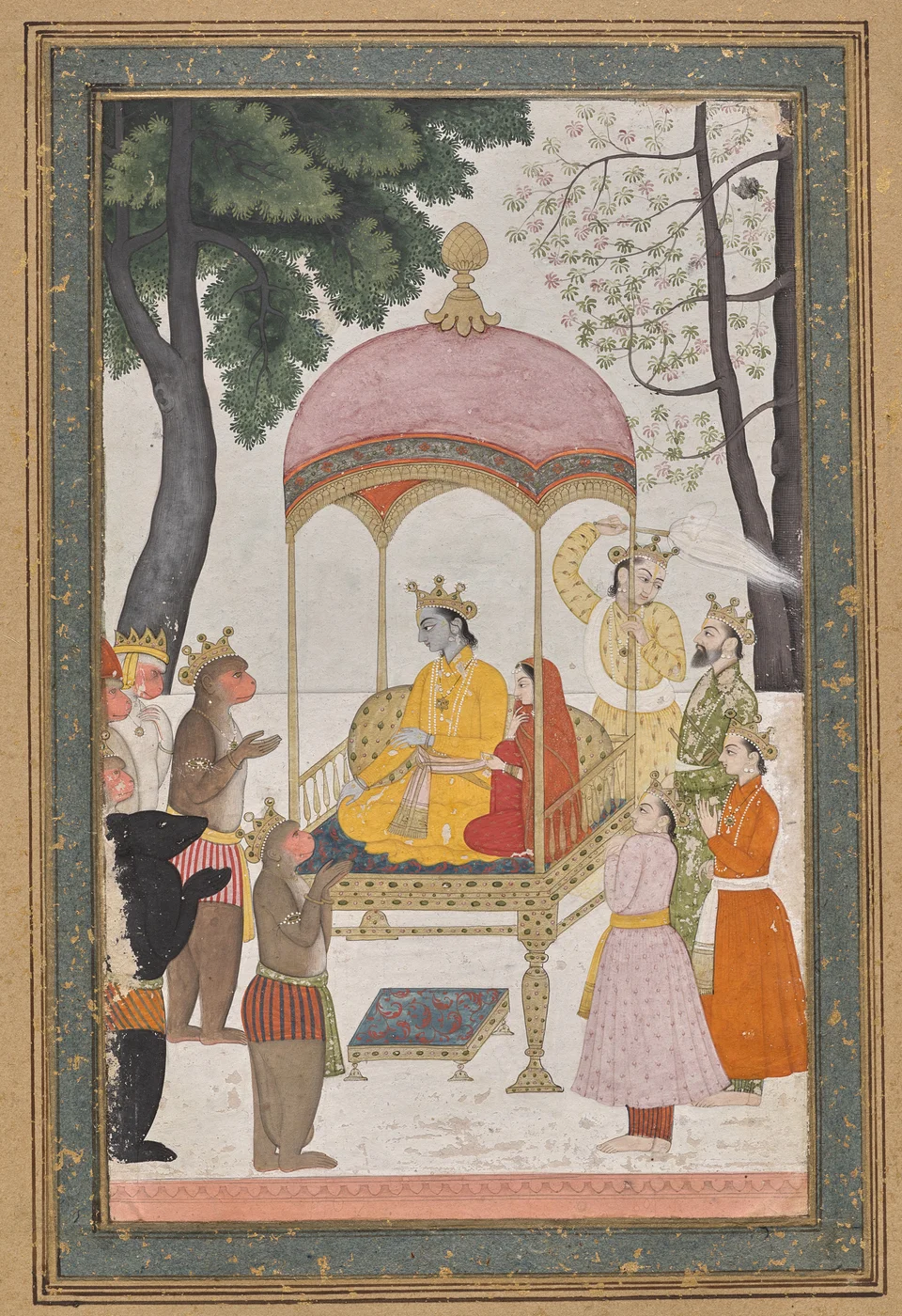
The most popular scene shows the pair seated on a throne after their return to Ayodhya, known as the Ram Darbar when Lakshmana and Hanuman attend them. It stands for an ideal, just rule and a home in order, which makes it a natural choice for a pooja room. A Pahari painting of about 1765 shows the enthroned couple receiving homage from their monkey and bear allies, with Rama’s brothers at the side.
The wedding
The svayamvara and the wedding are joyful scenes, full of music and colour, and they make beautiful gifts for newlyweds.
Exile in the forest
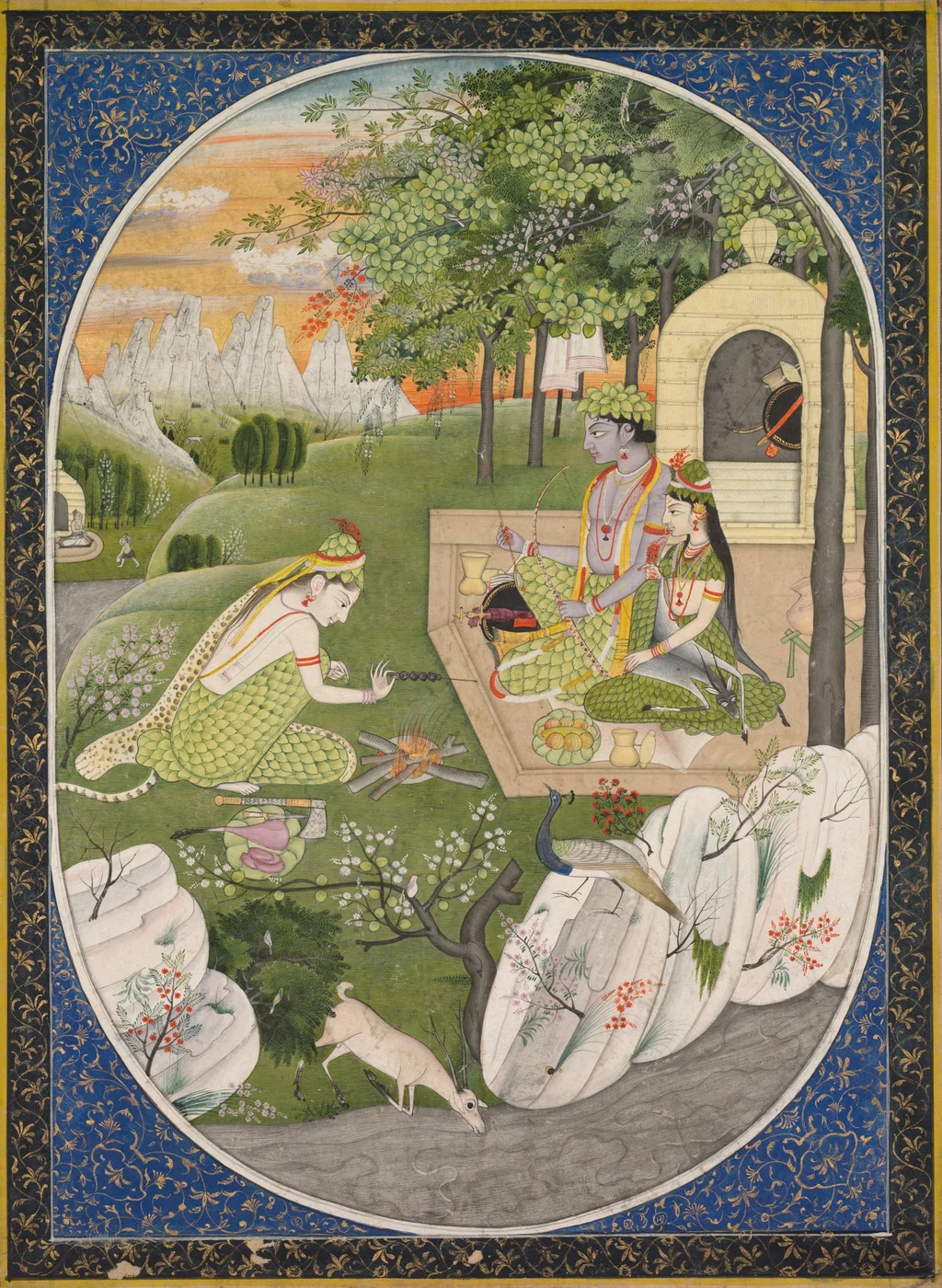
Rama, Sita and Lakshmana walking through the forest is the gentlest of the Ramayana subjects. An oval Pahari painting of about 1830 shows the three in a soft landscape; the oval format itself was adopted by Indian artists from European models. Another, from Malwa in central India around 1650, shows them visiting the hermitage of the sage Bharadvaja at Prayaga, in a bold, flat style.
Hanuman and Rama
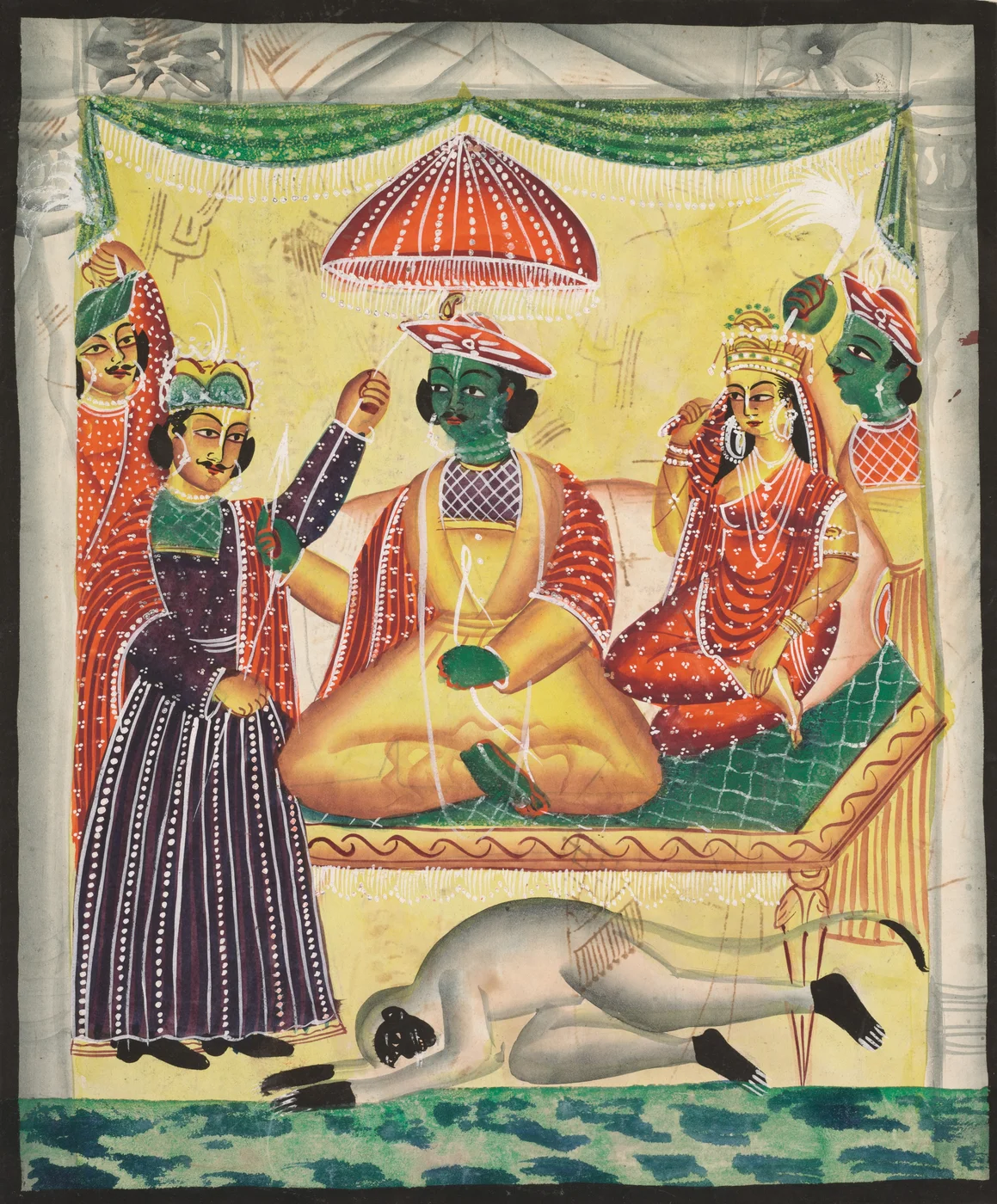
Many paintings include Hanuman bowing at Rama’s feet as a picture of humility and service. A Kalighat painting from Kolkata of about 1890 shows him in exactly this pose, in quick, sweeping brushstrokes.
Scenes usually avoided at home
Painters have also shown Sita’s abduction, her captivity in Lanka and the great battle. These are powerful works of art, but many families prefer not to display scenes of separation or war in the home, especially in a bedroom or as a wedding gift.
Ram Sita painting styles compared

| Style | Look | Works well in |
|---|---|---|
| Kangra (Pahari) | Soft colours, graceful figures, gentle landscape | Living rooms, bedrooms, gifts for couples |
| Mughal style | Fine detail, rich borders, formal poses | Studies, formal rooms |
| Basohli | Bold colour, large eyes, strong design | Modern homes needing one striking piece |
| Oil on canvas | Painterly, close-up, realistic | Pooja rooms, large walls |
| Kalighat | Quick, bold brush lines, plain background | Lovers of folk art |
Learn more in our guides to Kangra painting, Basohli painting and Mughal painting.
How to recognise Rama and Sita in a painting
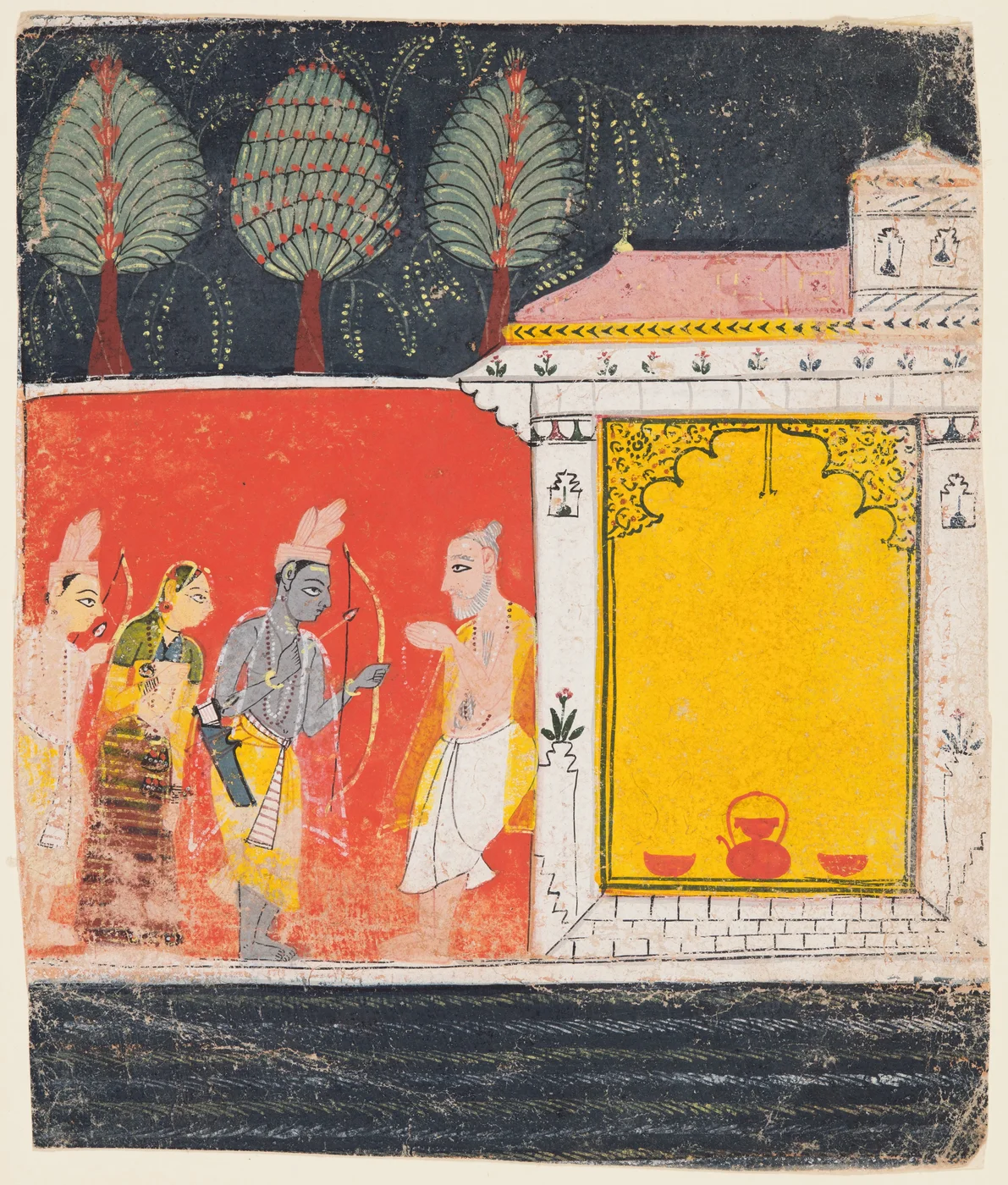
- Blue or dark skin: Rama, an avatar of Vishnu, is usually painted blue or dark, like Krishna.
- Bow and arrows: his weapons tell him apart from Krishna, who holds a flute.
- Crown: a tall royal crown in palace scenes; simple matted hair in forest scenes.
- Sita beside him: usually on his left, in fine jewels when enthroned and simple dress in exile.
- Lakshmana and Hanuman: the fair-skinned younger brother with a bow, and the devoted monkey god at their feet.
Where to place a Ram Sita painting
- Pooja room: enthroned scenes, on a clean wall at eye level.
- Living room: a larger Ram Darbar or forest scene can become a calm focal point.
- Entrance: a blessing for all who enter, on a wall inside the home.
- Avoid: bathrooms, under staircases, next to shoe racks and damp corners.
Many couples like a Ram Sita painting in their room as a symbol of a strong marriage, while other families prefer to keep devotional images out of bedrooms. Follow the custom of your own home. Our guide to paintings to avoid at home explains popular Vastu advice.
A meaningful wedding gift
A painting of Rama and Sita carries a simple wish: a marriage built on respect and devotion. Choose an enthroned or wedding scene, avoid exile and battle subjects, and frame it before you give it. Our wedding gift paintings guide has ideas for budgets and subjects.
Our hand-painted Ram Sita paintings
Every painting at Artshaili is painted by hand in Jaipur:

- Ram Sita in Mughal style, ₹14,999.
- Ram Sita miniature painting, ₹21,999.
- Ram Sita in Kangra style, ₹25,449.
- Ram and Laxman in Basohli shaili, ₹29,999.
- Shri Ram oil on canvas, ₹6,999.
Prices are current at the time of writing. For a different size or scene, such as a full Ram Darbar, contact us about a custom painting.
Frequently asked questions
Yes. It is a popular devotional image of love, loyalty and a happy family, and suits pooja rooms and living rooms.
Vivah Panchami celebrates the wedding of Rama and Sita. It falls on the fifth day of the bright fortnight of Margashirsha, usually in November or December.
On a clean wall at eye level in a pooja room, living room or entrance. Avoid bathrooms, shoe racks and damp walls.
Yes, especially an enthroned or wedding scene. Many people avoid exile or battle scenes as gifts for couples.
A Ram Darbar shows Rama and Sita enthroned in Ayodhya, usually with Lakshmana and Hanuman attending them.
Both are often painted blue, but Rama usually carries a bow and arrows, while Krishna holds a flute and wears a peacock feather.
 Baramasa Sawan Month Painting in Kangra Style Original price was: ₹35,999.00.₹31,999.00Current price is: ₹31,999.00.
 Maru Ragini Mewar School Miniature Painting– Hand… Original price was: ₹39,999.00.₹27,999.00Current price is: ₹27,999.00.
 Natural Stone Colours for Indian Miniature Painting… Original price was: ₹19,999.00.₹16,999.00Current price is: ₹16,999.00.
 Handmade Sindoor Natural Pigmented Powder Color for…₹499.00

Shikha Arya is the author of Artshaili.com blogs and a Student of environmental science at the University of Rajasthan. Except writing, she loves sketching, singing, dancing, and reading.