
 Indian Miniature
 Painting Styles
 Modern Art
 Portraits & Gifts
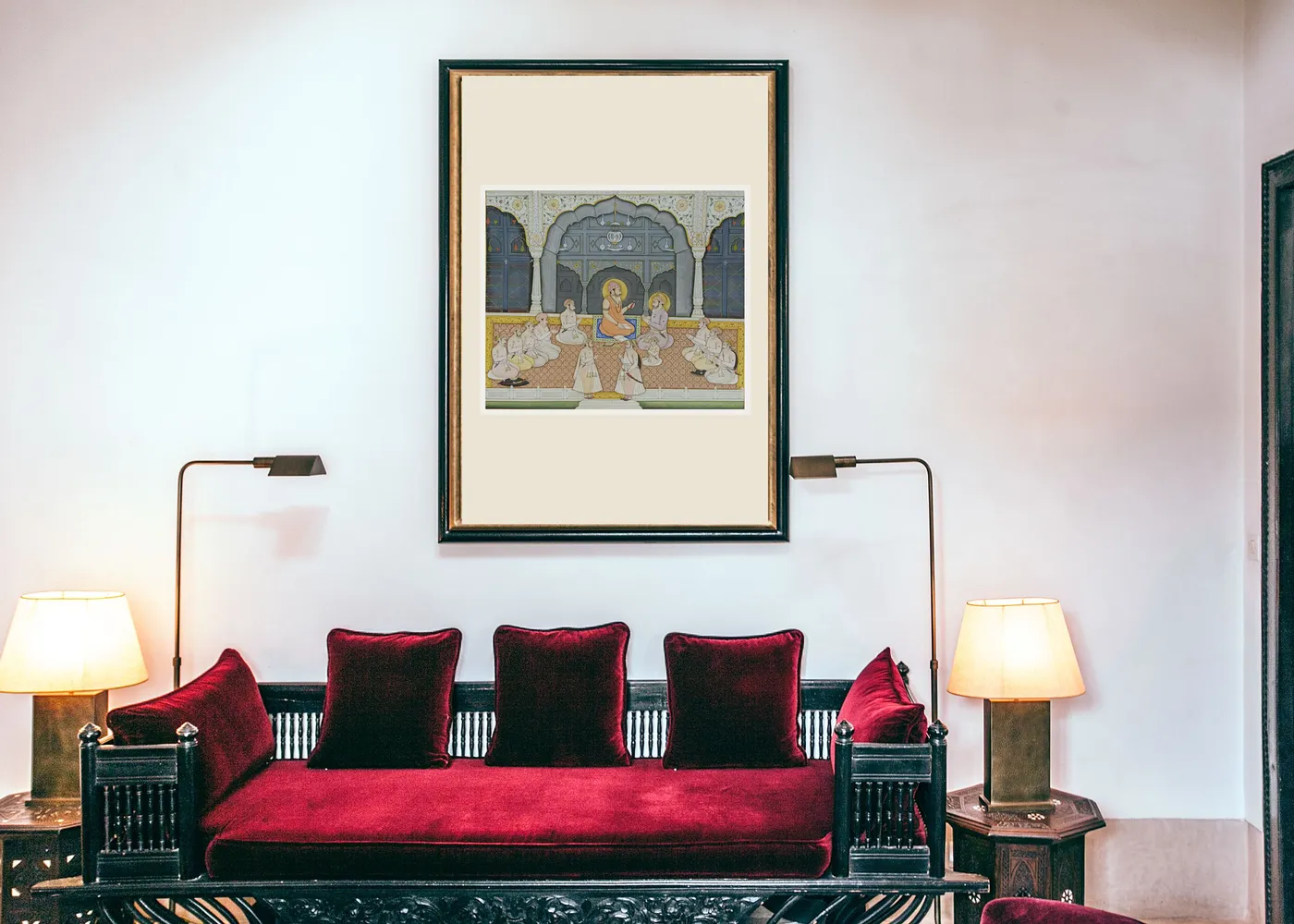


In short: Bundi and Kota painting are two closely related schools of Rajasthani miniature painting from the Hadoti region of south-east Rajasthan. Bundi grew out of Mughal-trained workshops in the late 16th century and is known for lush landscapes, Ragamala sets, lovers on terraces and refined line work. Kota split from Bundi in 1625 and became famous for dramatic hunting scenes, powerful elephants and portraits of its Maharaos, drawn with a confident, almost calligraphic brush.
If you love Rajasthani miniatures, sooner or later you meet a painting full of monsoon clouds, peacocks, flowering trees and a lady waiting on a white terrace. Often it comes from Bundi. And if you see a tiger leaping at a hunter on horseback, or a pair of elephants locked in combat, there is a good chance it comes from Kota, just across the Chambal river. The two styles share a family history, but each has its own personality. Here is how to tell them apart and what to look for if you want one at home.
Where Bundi and Kota are
Bundi and Kota lie in Hadoti, the land of the Hada Chauhan Rajputs in south-east Rajasthan. Bundi was the older kingdom. In 1624 the Mughal emperor Jahangir took part of Bundi’s territory and gave it to Rao Madho Singh, the younger brother of Bundi’s ruler. That grant became the independent state of Kota. Politically the two courts went their own ways, but artistically they remained branches of the same tree, which is why historians often speak of a single Bundi-Kota idiom.
How Bundi painting began
Bundi painting has an unusually clear starting point. A Ragamala set dated 1591, known as the Chunar Ragamala, was probably painted for a member of the Bundi royal family. Three of its artists describe themselves as trained in the imperial Mughal workshops under the Persian masters Mir Sayyid Ali and Abd al-Samad. The result is a rough but lively adaptation of the Mughal style, and it became a model for later Bundi painters.
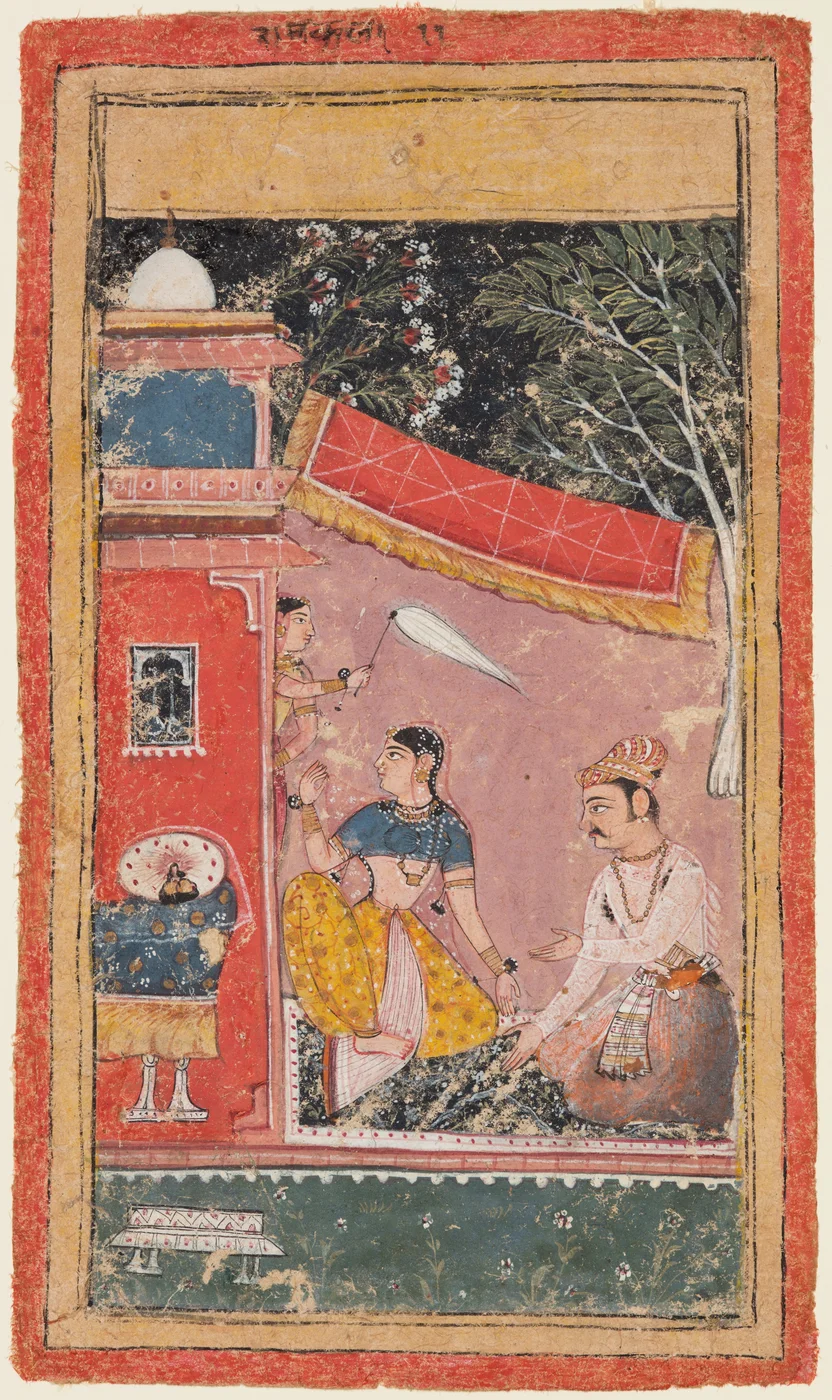
That Mughal training explains a lot about the look of Bundi art: a refined line and a controlled palette, very different from the flat, bold colours of Mewar. Under Rao Ratan Singh (ruled 1607 to 1631) the style can be followed through dated miniatures and wall paintings, and by the late 17th century Bundi artists were painting some of the most beautiful Ragamala and Rasikapriya pages in Rajasthan.
What makes a Bundi painting
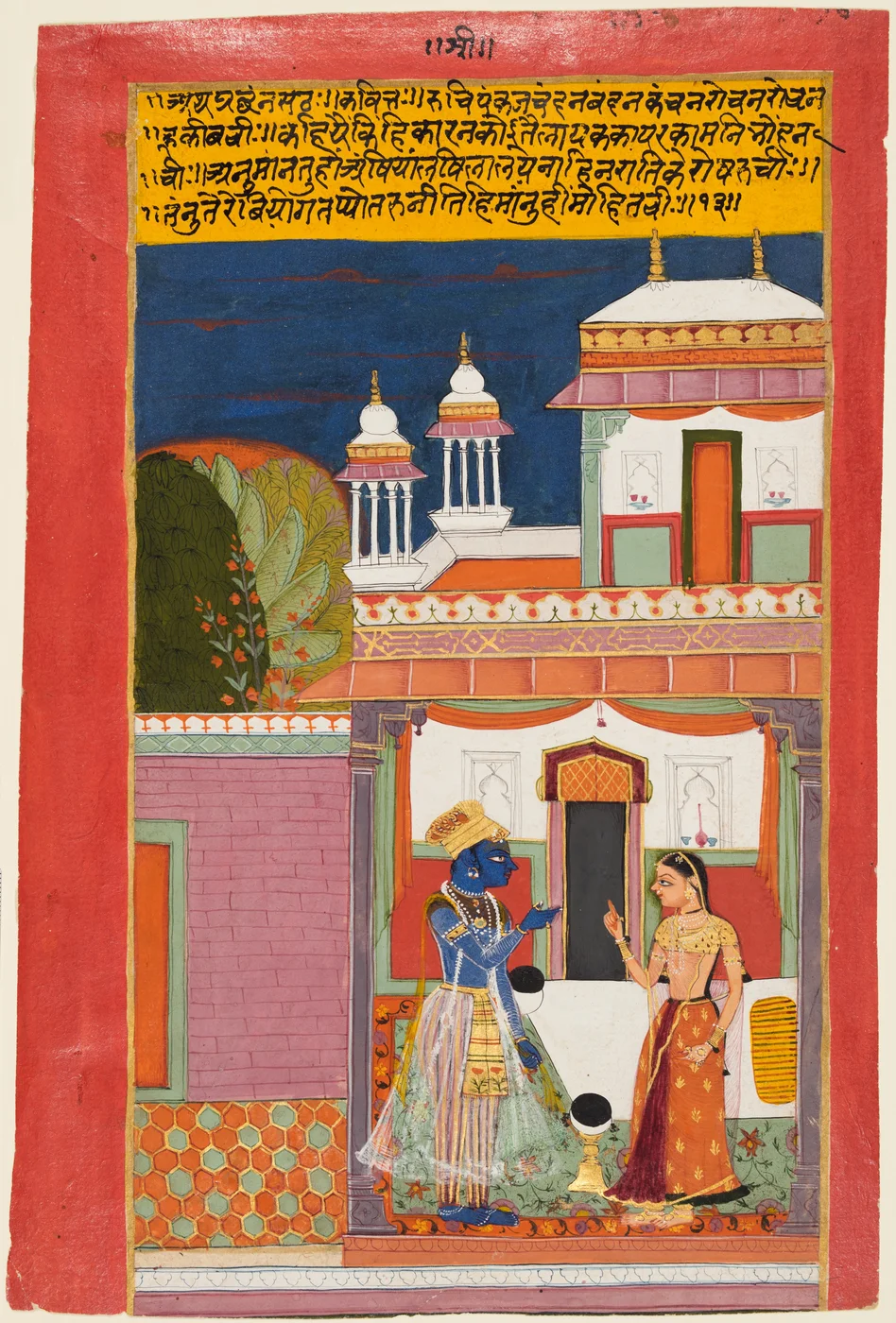
- Rich, green landscapes: dense trees, banana plants, lotus ponds, ducks and flowering creepers, often under dark monsoon skies with lightning.
- White architecture: heroines stand on cool white terraces and pavilions, set against warm, glowing colours.
- Round, gentle faces: women with small noses, large eyes and a soft roundness of cheek, often with a distinctive shading around the face.
- Love and music: Ragamala paintings (visual forms of musical modes), the Rasikapriya and Baramasa (the twelve months), lovers meeting and heroines waiting.
- Warm, passionate colour: reds, oranges and deep greens, with gold for jewellery.
Our Art of Bundi miniature painting captures this mood, and the Raja Bhoj horse riding miniature shows the Bundi love of movement and pageantry.
Later Bundi: portraits and the Chitrashala
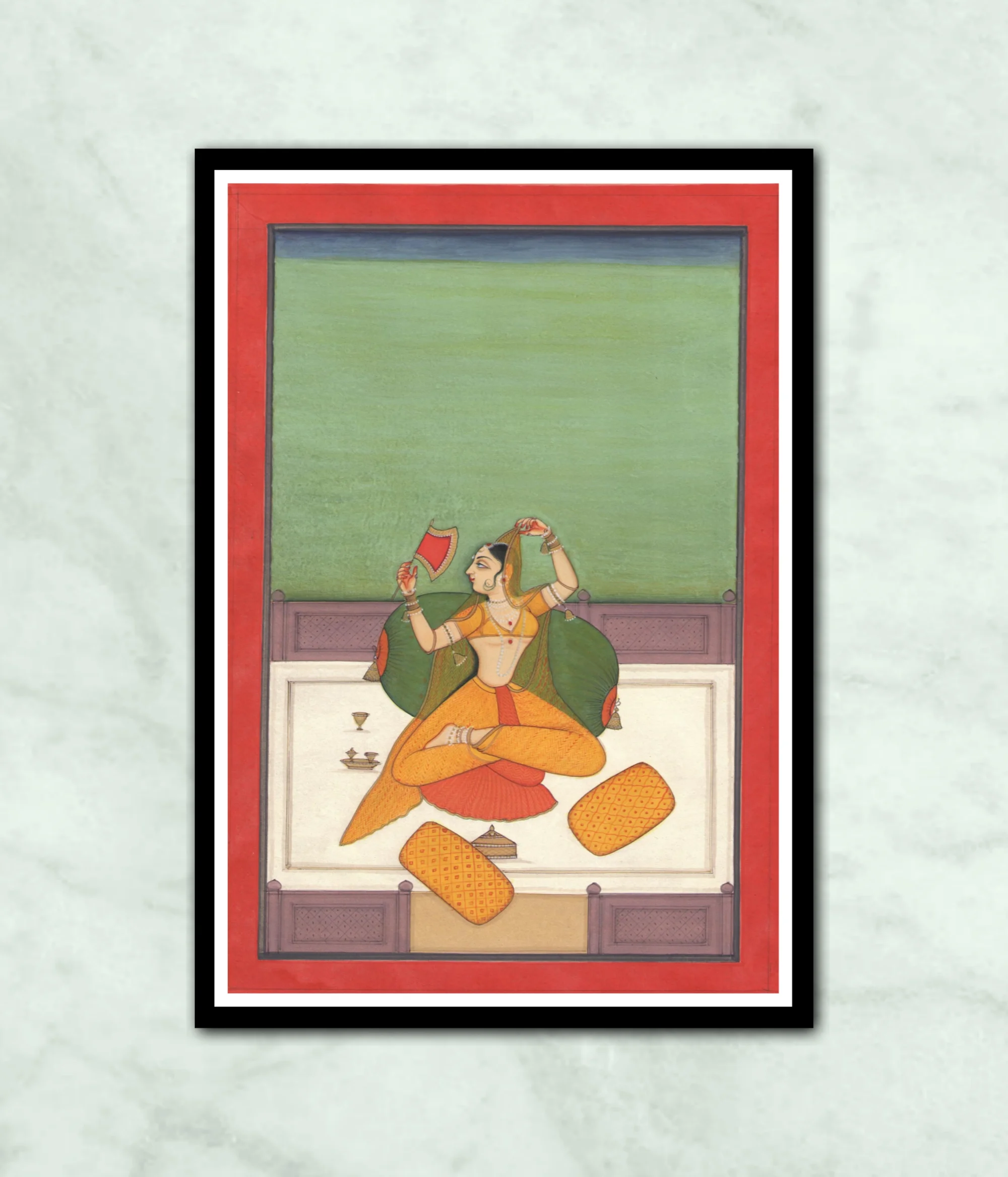
A succession struggle in the early 18th century slowed royal patronage, until the reign of Rao Umed Singh (1739 to 1770). His portrait with his sons is one of the key paintings of the later Bundi style. Later Bundi work is often small in scale and concentrates on women and romantic subjects in hot, passionate colours, with figures set against white architecture.
Bundi’s painting tradition also survives on its walls. The Chitrashala, in the Ummed Mahal of Taragarh Fort, is covered with murals of Ragamala scenes, love stories and court processions, showing both Mughal and Mewar influence. It is still one of the best places in India to see Rajasthani painting on a large scale. By the end of the 19th century, painting at Bundi had given way to photography.
Kota: the hunt, the elephant and the Maharao
One great Bundi painter, known today as the Hada Master (active about 1610 to 1660), specialised in elephants and hunting scenes. At some point he moved to the new kingdom of Kota, and his work became the foundation of Kota painting. The earliest major portrait in the Kota style, Maharao Jagat Singh of Kota in a Garden, is attributed to him.
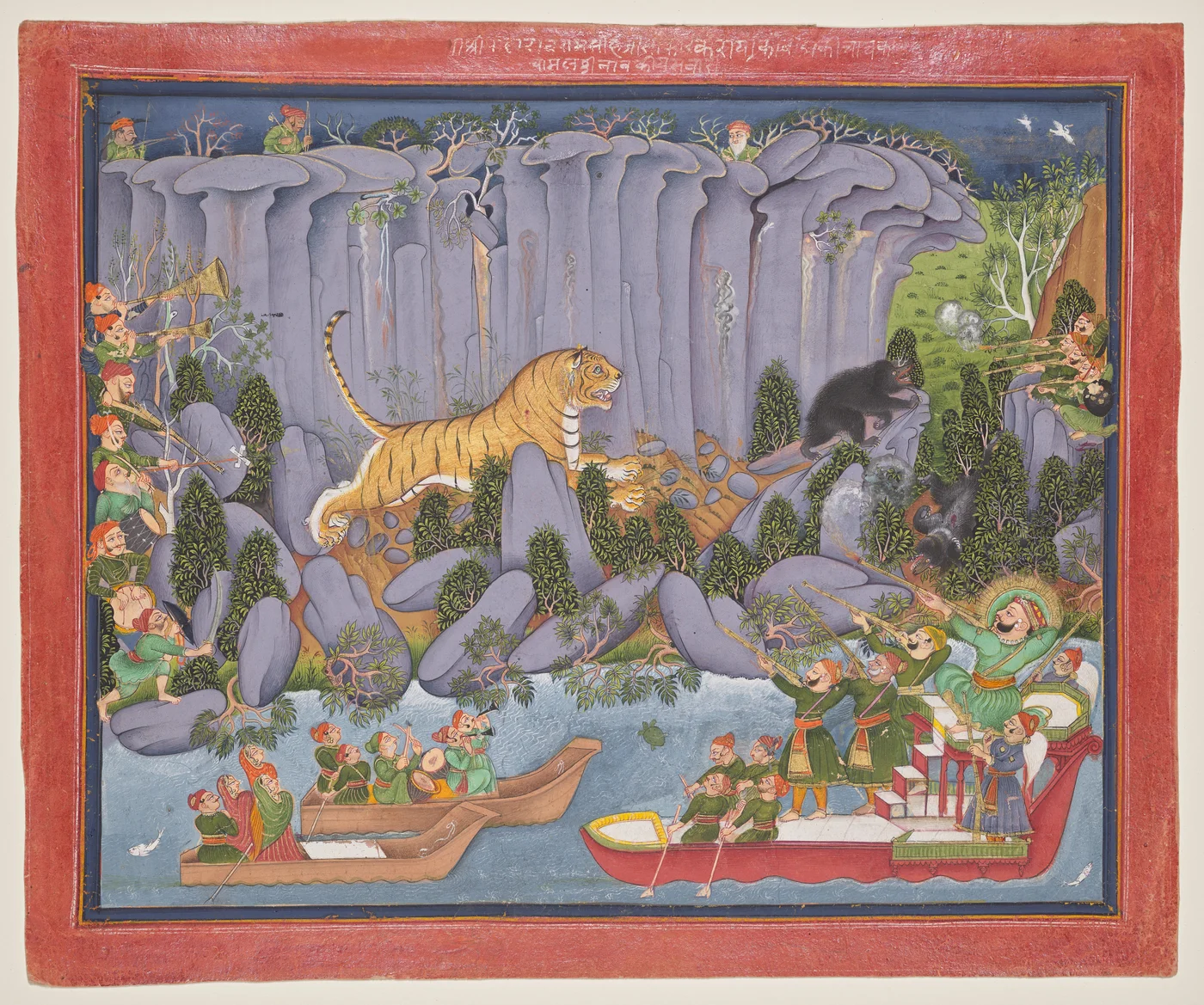
From there Kota developed one of the most instantly appealing genres of Rajput art: great hunting scenes in which the Maharaos face tigers, lions, boars and wild elephants. Kota artists of the 18th century, led by Shaykh Taju, were master draughtsmen who brushed their animals with the skill of calligraphers. Large hunting pictures were made especially during the reign of Umed Singh of Kota (1770 to 1819).
How to recognise a Kota painting
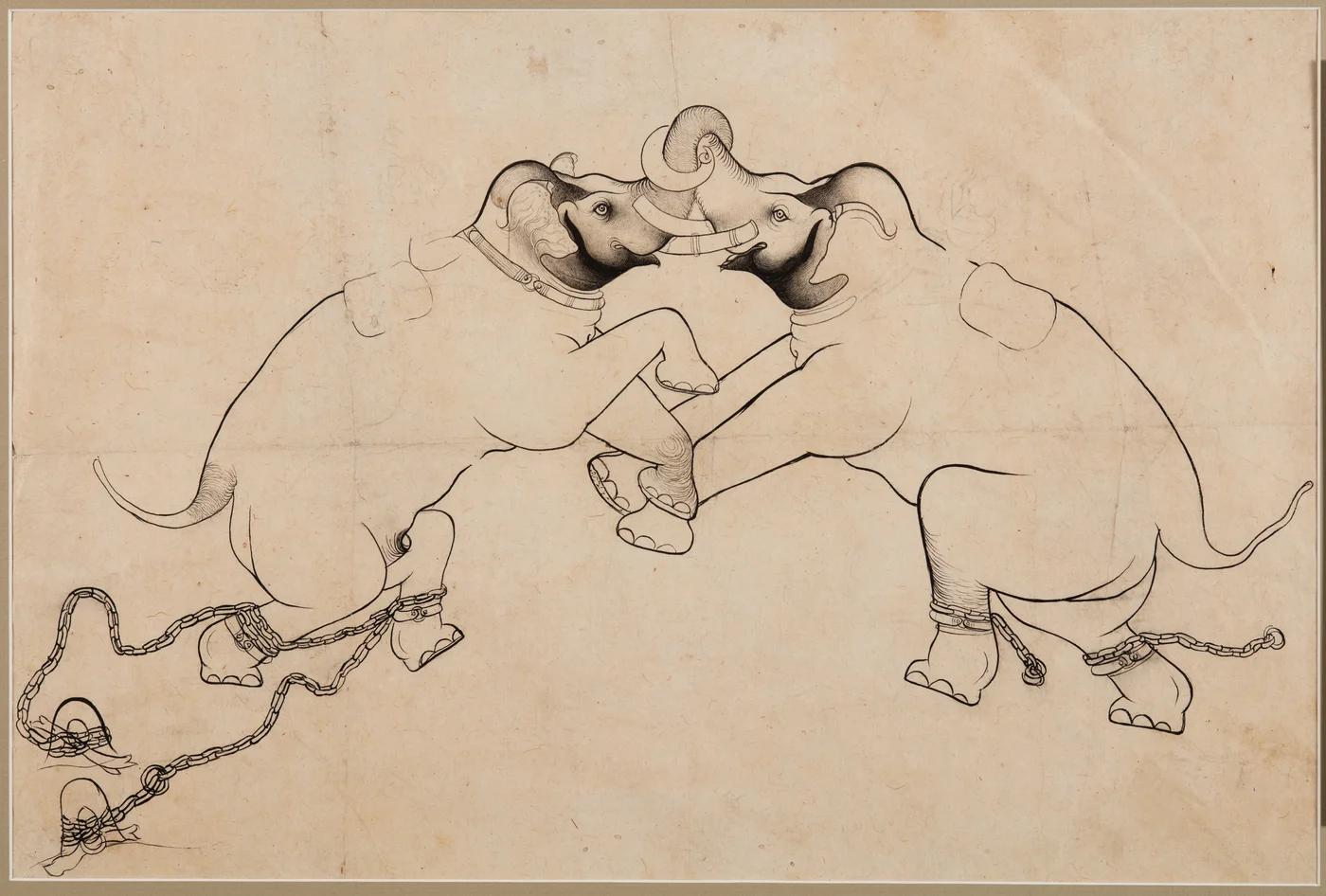
- Energy and movement: animals leap, charge and twist across the page.
- Superb drawing: colour is often sparse, so the confident line shows through. Kota artists also drew from life, and their sketches are among the liveliest in Indian art.
- Hillside jungles: the landscape is seen from above and seems to slope upwards, crowded with trees and arching bamboo.
- Elephants: studies of elephants fighting or parading were a Kota speciality from the 17th century onwards.
Our Rao Ram Singh of Kota hunting a rhinoceros follows one of the most famous Kota compositions, and the Kota school three elephants and Kota elephant miniature show the school’s love of these animals.
Devotion and court life in Kota
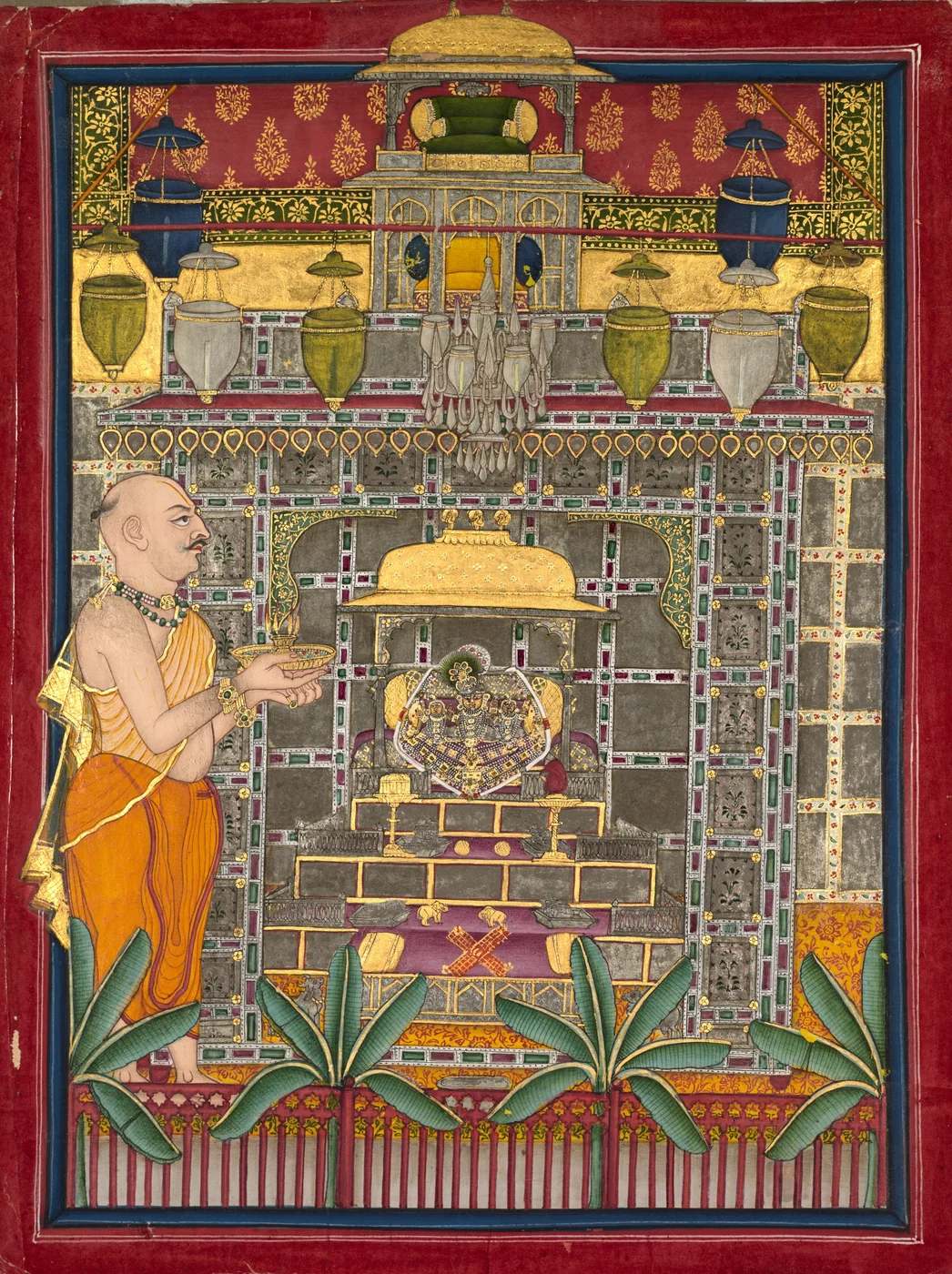
Kota painting was not only about the hunt. Its artists painted portraits and Ragamalas; one Kota Ragamala set of 1768 has more than 240 miniatures. Religious painting grew too, especially images of Krishna in the form of Brijnathji, linked with the Shrinathji tradition of Nathdwara. Under Maharao Ram Singh II (ruled 1827 to 1866) painters recorded festivals, processions and even the court playing Holi on elephants. Shatru Sal (ruled 1866 to 1889) was the last important patron, and by the end of the 19th century Kota painting had faded away.
Elegant women on horseback were another Kota favourite. Our Lady riding a blue roan is a hand-painted take on this theme.
Bundi and Kota compared
| Bundi | Kota | |
|---|---|---|
| Began | Late 16th century (Chunar Ragamala, 1591) | After 1625, when Kota became a separate state |
| Favourite subjects | Ragamala, Rasikapriya, lovers, heroines, court life | Royal hunts, elephants, portraits, Krishna as Brijnathji |
| Landscape | Lush gardens, lotus ponds, monsoon skies | Steep jungle hillsides seen from above |
| Colour | Warm, rich and glowing | Often sparse, letting the drawing lead |
| Signature feature | Round faces, white terraces, wall paintings of the Chitrashala | Movement, animals drawn like calligraphy |
Both schools sit within the wider family of Rajasthani painting. Our guide to Rajasthani painting schools places them alongside Mewar, Kishangarh, Marwar and Jaipur, and our Mughal painting guide explains the imperial style that shaped early Bundi art.
Choosing a Bundi or Kota painting for your home
Bundi paintings, with their lovers, music and gardens, suit bedrooms, reading corners and living rooms where you want a calm, romantic mood. Kota hunting and elephant scenes are bolder and full of energy, which makes them good statement pieces for a study, an office cabin or a long wall above a sofa. Miniatures are small and detailed, so frame them with a wide cream mount, hang them at eye level and keep them out of direct sunlight. Our guide to paintings for the living room has more advice on size and placement.

Every Bundi and Kota painting at Artshaili is hand-painted by our artists in Jaipur with stone colours on handmade paper, so no two are identical. Browse the full Rajasthani paintings collection, or contact us for a custom size.
Frequently asked questions
Bundi painting is a school of Rajasthani miniature painting from the former Bundi state in south-east Rajasthan. It grew from Mughal-trained workshops in the late 16th century and is known for lush landscapes, Ragamala scenes, lovers and refined line work.
Kota painting is famous for dramatic royal hunting scenes, powerful studies of elephants and portraits of the Maharaos of Kota, drawn with a lively, calligraphic brush.
They share the same roots, but Bundi favours love, music and gardens in warm colours, while Kota is known for hunts, animals and energetic drawing with sparser colour.
In 1624 Jahangir gave part of Bundi’s territory to Rao Madho Singh, who ruled it from 1625 as the independent state of Kota.
The Chitrashala in the Ummed Mahal of Taragarh Fort, Bundi, is decorated with murals of Ragamala scenes, love stories and court processions.
Yes. Every painting is hand-painted by Artshaili artists in Jaipur using stone colours on handmade paper, never printed.
 Maru Ragini Mewar School Miniature Painting– Hand… Original price was: ₹39,999.00.₹27,999.00Current price is: ₹27,999.00.
 Dancing Radha Krishna Painting in Rajasthani Shaili Original price was: ₹31,999.00.₹29,999.00Current price is: ₹29,999.00.
 Raja Bhoj Painting in Rajasthani Shaili Original price was: ₹21,999.00.₹19,999.00Current price is: ₹19,999.00.
 The Art Of Bundi Miniature Painting Original price was: ₹11,999.00.₹10,999.00Current price is: ₹10,999.00.

Shikha Arya is the author of Artshaili.com blogs and a Student of environmental science at the University of Rajasthan. Except writing, she loves sketching, singing, dancing, and reading.