
 Indian Miniature
 Painting Styles
 Modern Art
 Portraits & Gifts
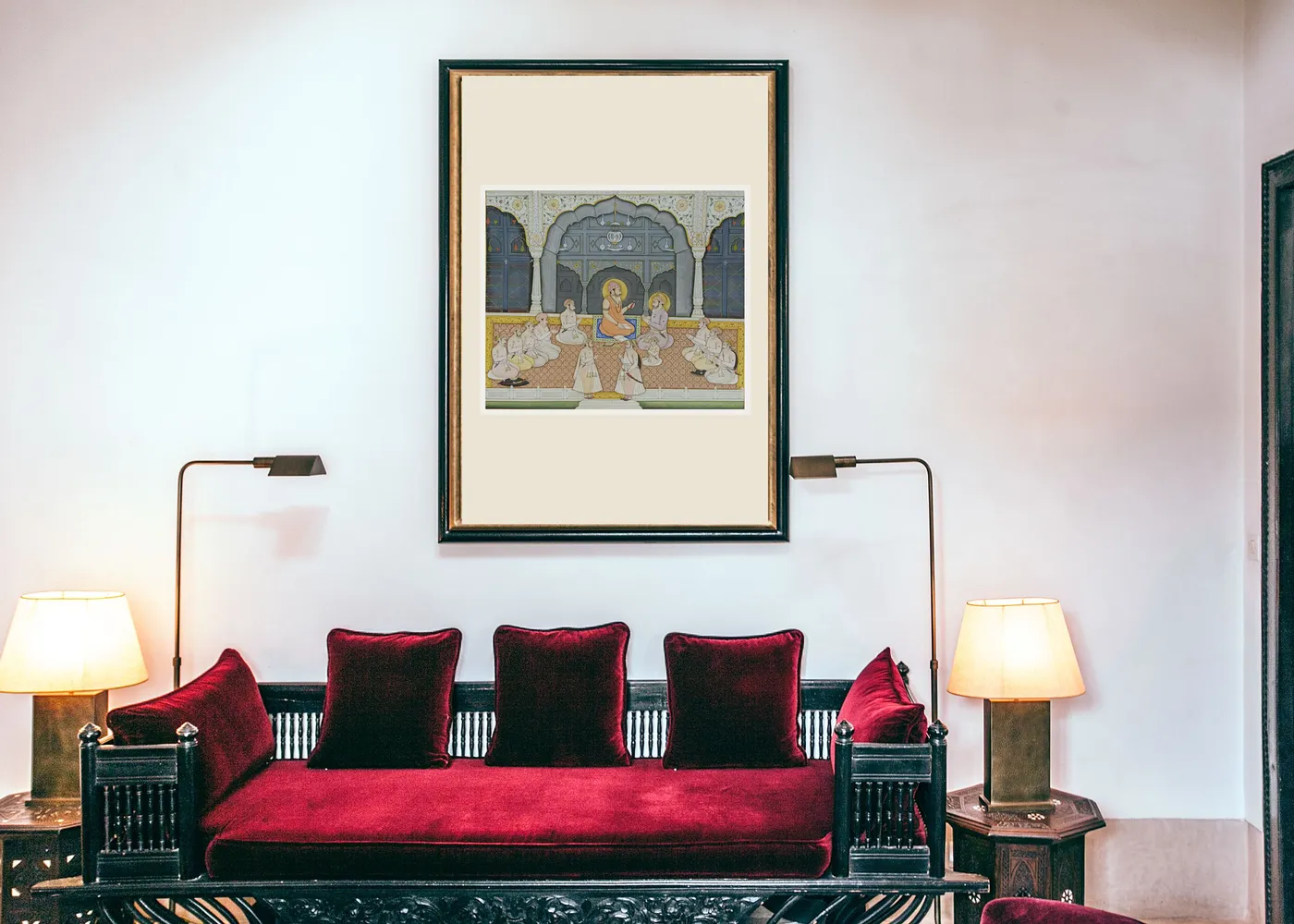


In short: A peacock painting is a favourite in Indian homes because the peacock, India’s national bird, stands for beauty, joy and the coming of the monsoon, and is closely tied to Krishna and Kartikeya. Choose a miniature for fine detail, Pichwai or folk styles for colour, and a modern acrylic for a contemporary room. Peacock paintings suit living rooms, entrances and bedrooms, and work best with a little empty wall around them.
Few subjects suit Indian art as well as the peacock. Its neck is a jewel-blue line, its tail a fan of eyes, and its dance a promise of rain. Court painters, temple artists and village folk painters have all loved it, and it remains one of the most searched subjects in wall art today. Here is what the peacock means in Indian painting, how each style treats it, and how to choose one for your home.
What does a peacock symbolise in Indian art?
The Indian peafowl is the national bird of India and has been part of the country’s art and stories for centuries.

- Krishna: he is often shown with a peacock feather in his crown, so the feather alone can suggest his presence.
- Kartikeya: the war god rides a peacock named Paravani as his vahana.
- The monsoon: peacocks dance at the first clouds, so in poetry and painting they announce rain and longing.
- Beauty and love: in miniatures a peacock on a terrace often mirrors the feelings of the heroine beside it.
- Royalty: peacocks walked the gardens of palaces, and the bird appears in jewellery, textiles and architecture.
Peacocks in Indian miniature painting
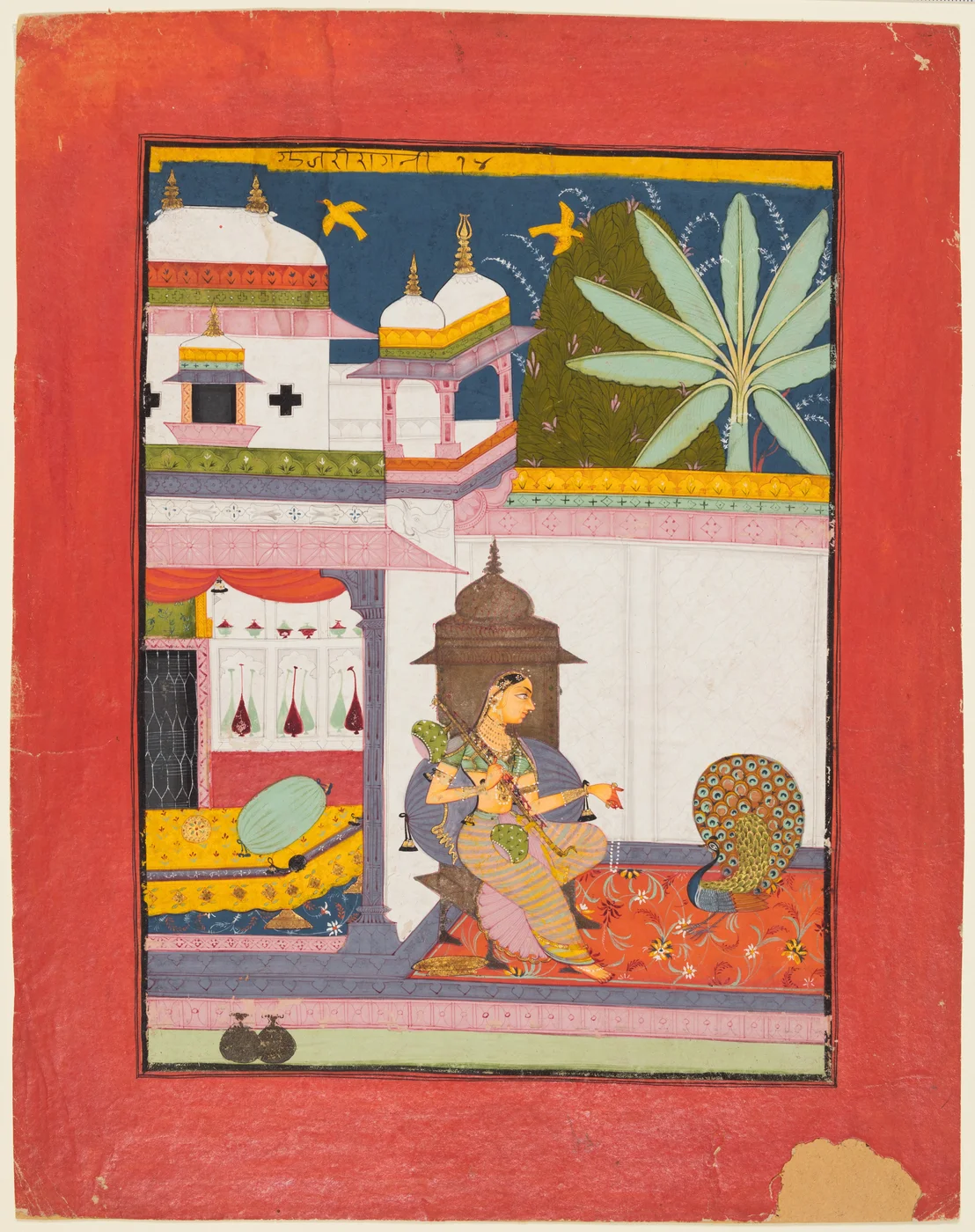
In Ragamala paintings, which turn musical modes into pictures, the peacock is a common companion. One beautiful example, made around 1680 in Bundi or Raghogarh, shows Gujari Ragini: a heroine offers her pearl necklace to a peacock while waiting for her lover. The bird becomes her confidant. Paintings like this are rarely just about a bird. They are about mood. Our Peacock dancing to the music of the nayika follows this tradition, with a heroine playing while the bird dances.
Mughal artists looked at the peacock differently. Influenced by the empire’s love of natural history, they studied feathers and posture closely. Our Dancing peacock in Mughal style shows that careful, almost scientific eye. See our guide to Mughal miniature painting for more on that tradition.
Peacock paintings by style

| Style | How the peacock looks | Best for |
|---|---|---|
| Mughal and Rajasthani miniature | Fine feathers, garden or terrace setting | Studies, gallery walls, small spaces |
| Pichwai | Peacocks among lotuses and cows, rich colour | Living rooms, entrances |
| Madhubani | Double outlines, pattern-filled body | Bright, relaxed homes |
| Warli and Gond | Simple shapes or fine dots and lines | Modern rooms, children’s rooms |
| Modern acrylic or oil | Expressive colour and texture | Contemporary apartments, offices |
Learn more in our guides to Pichwai painting, Madhubani art and Warli art.
Is a peacock painting good for the home?
Many families consider it a positive subject. Popular Vastu guidance often describes peacock images as bringing beauty and good fortune, and many people place them in a living room or at an entrance, and sometimes in a bedroom for harmony between a couple. Advice on directions varies between practitioners and there is no single rule, so treat this as tradition. The practical test is simpler: does the painting make you feel good when you walk past it? Our guide to Vastu approved paintings covers other popular choices.
Where to hang a peacock painting

- Living room: a medium or large piece above a sofa or console. Choose a size about two thirds the width of the furniture.
- Entrance: a bright, cheerful image makes a warm first impression.
- Bedroom: a pair of peacocks, or a soft palette, suits the calm of the room.
- Small walls: a single miniature with a wide mount gives a narrow wall real presence.
Peacock paintings are detailed and colourful, so give them room. Avoid hanging one beside busy wallpaper or a large TV, and keep your cushions and curtains quieter so the blues and greens can stand out. Our guide to paintings for the living room explains size and hanging height.
Colours that work with peacock art
- Teal, gold and cream: the classic pairing, which brings out the bird’s own colours.
- White or pale grey walls: let a richly coloured painting become the focus.
- Dark green or navy walls: add drama with a gold frame and a wide cream mount.
- Warm wood: teak and walnut furniture balance cool blues beautifully.
Framing and care
Miniatures on paper should be framed behind glass with an acid-free mount. A thin gold or dark wood frame suits most traditional peacock paintings; choose a simple black or walnut frame for modern ones. Keep any original out of direct sun, which fades colour, and away from damp walls and air conditioner vents.
Hand-painted peacock paintings at Artshaili
Every painting in our collection is an original, painted by hand in Jaipur with free shipping across India:
- Dancing peacock in Mughal style, ₹17,999.
- Peacock dancing to the music of the nayika, ₹27,449.
Prices are current at the time of writing. You may also like our Nathdwara paintings and Indian miniature paintings. Want a larger peacock, a pair, or specific colours for your wall? Contact us about a custom painting.
Frequently asked questions
Beauty, joy, love and the monsoon. It is also linked with Krishna, who wears a peacock feather, and Kartikeya, who rides a peacock.
Many families see it as a positive subject and hang it in a living room or entrance. Vastu advice varies, so treat it as tradition.
A living room, entrance or bedroom, on a clean wall at eye level, with some empty space around it.
Miniatures suit those who love detail, Pichwai and folk styles bring bright pattern, and acrylics suit contemporary homes.
The peacock echoes the heroine’s mood, especially longing in the monsoon, and acts almost as her companion in the scene.
Yes. Contact us with your wall size and colours, and our artists can paint one for you.


Shikha Arya is the author of Artshaili.com blogs and a Student of environmental science at the University of Rajasthan. Except writing, she loves sketching, singing, dancing, and reading.