
Indian Art
Pahari Paintings: Kangra, Basohli, Guler and Jammu Styles Explained

Oct
Quick answer: Pahari painting is the miniature painting of the hill kingdoms of the Himalayan foothills, in present-day Himachal Pradesh, Jammu and the Punjab hills, from the late 17th to the 19th century. Its main schools are Basohli (bold and fiery), Guler (refined and naturalistic) and Kangra (lyrical and romantic), along with Jammu, Chamba and Mandi.
What is Pahari painting?
Pahari means “of the hills”. Dozens of small hill states, each with its own court, supported families of painters who moved between kingdoms. The result is a family of related styles, all devoted to poetry, music and above all the love of Radha and Krishna.

The main schools of Pahari painting
Basohli: bold colour and intense emotion
Basohli, in the Jammu hills, is one of the earliest Pahari schools (late 17th century). Look for strong primary colours, flat red or yellow backgrounds, large expressive eyes, and jewellery that once sparkled with fragments of beetle wing. See our Basohli paintings, such as Krishna with his friends.

Guler: the bridge to refinement
In the 18th century, painters of the Guler area, especially the family of Pandit Seu and his sons Manaku and Nainsukh, introduced softer colours, natural landscapes and graceful, observed figures. Nainsukh worked for Raja Balwant Singh of Jasrota, and his intimate court scenes are considered masterpieces of Indian art.
Kangra: lyrical romance
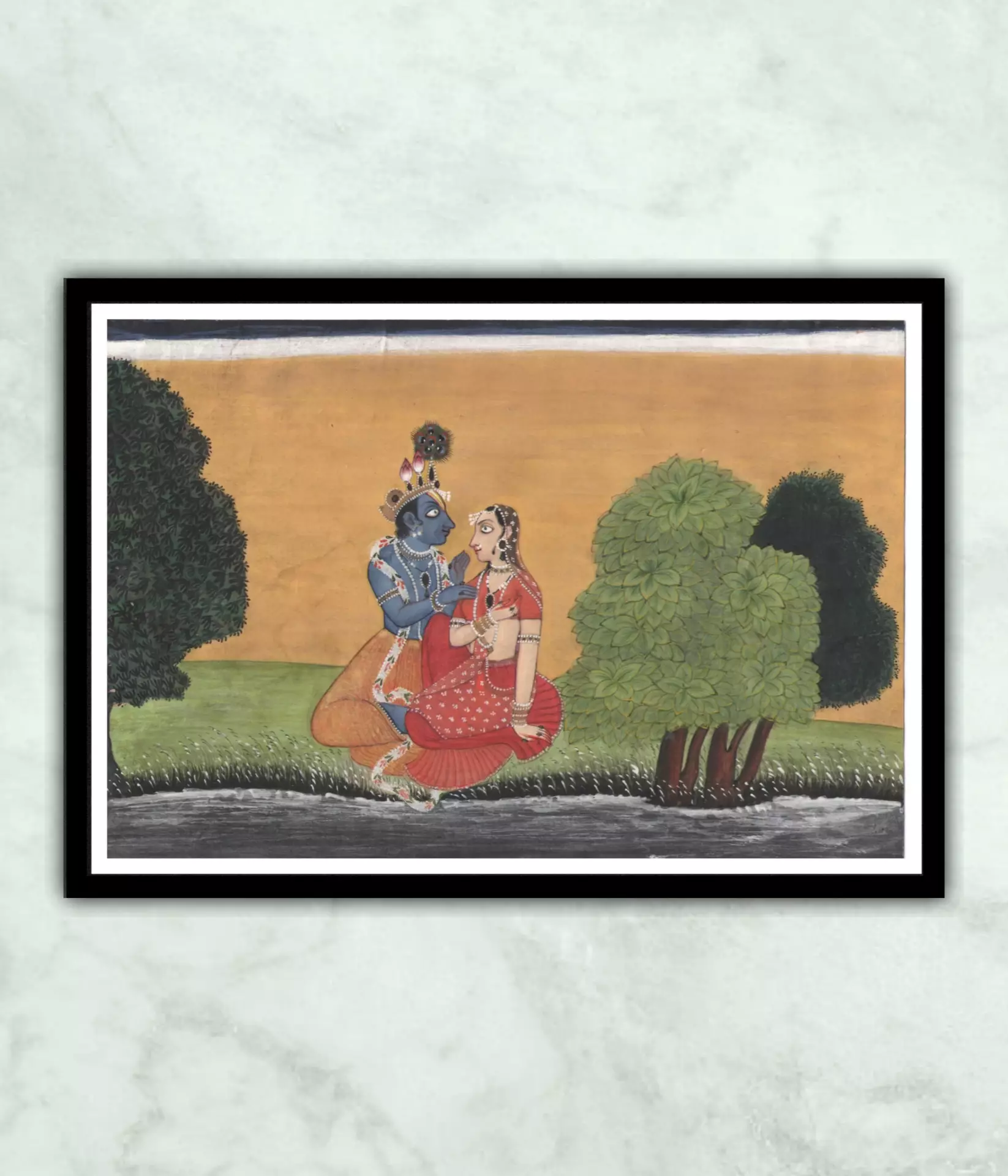
Kangra painting flowered in the late 18th century, notably under Raja Sansar Chand. It is the most romantic of the hill styles: cool colours, delicate lines, slender figures, and landscapes of rivers, flowering trees and monsoon clouds. Explore Kangra paintings like the Shiv Parvati Kangra miniature and the Kangra school miniature painting.

Jammu, Chamba and Mandi
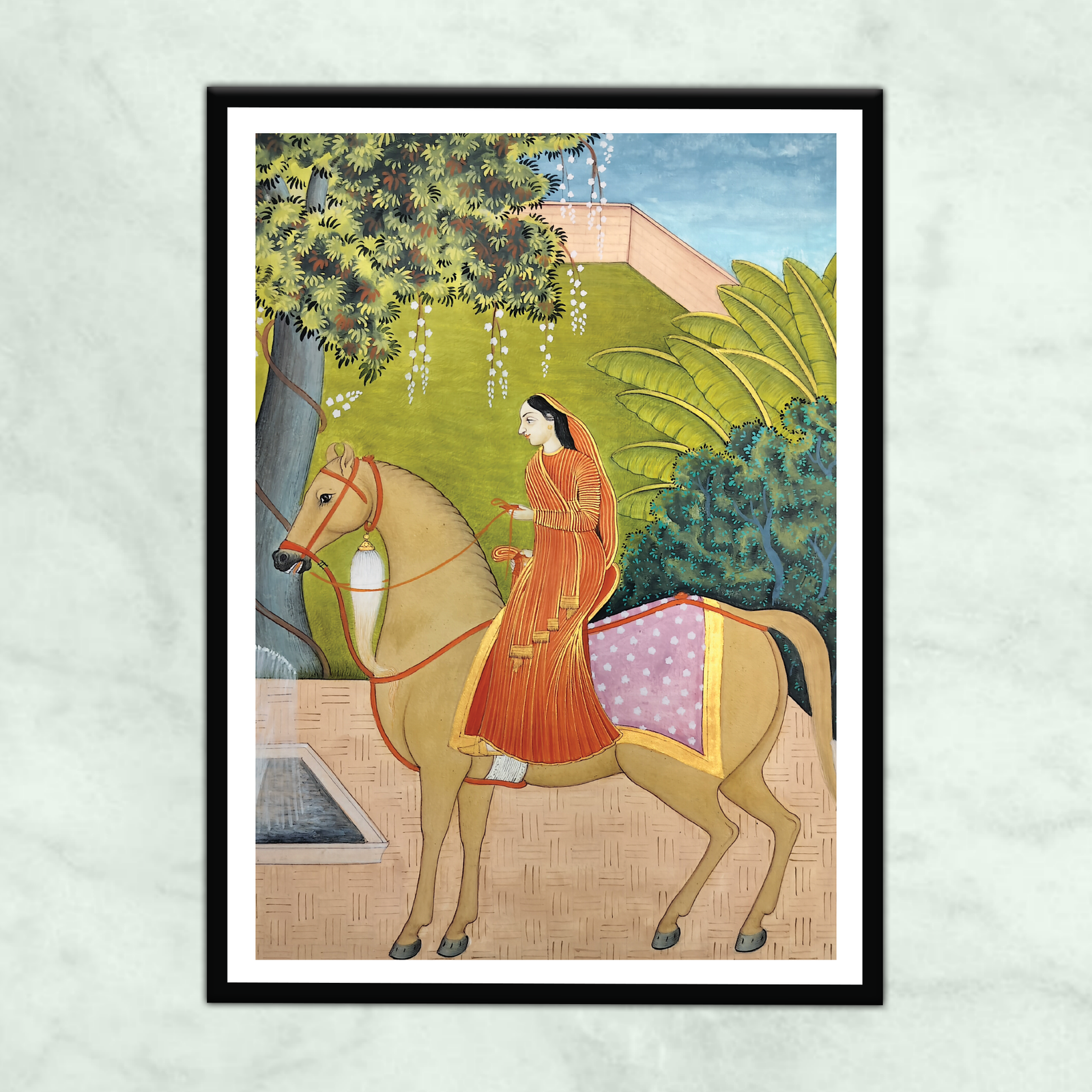
Other hill courts developed their own variations, from the elegant horse riders of the Jammu school to the distinctive local styles of Chamba and Mandi. See our Jammu paintings, including the Lady with Horse.
Kangra vs Basohli: how to tell them apart
| Basohli | Kangra | |
|---|---|---|
| Period | Late 17th to early 18th century | Late 18th to 19th century |
| Colour | Bold, hot, flat backgrounds | Soft, cool, naturalistic |
| Faces | Large intense eyes, strong profile | Delicate, gentle, idealised |
| Landscape | Minimal, decorative | Detailed rivers, trees and skies |
| Mood | Passionate, dramatic | Lyrical, tender, dreamy |
Favourite themes in Pahari painting
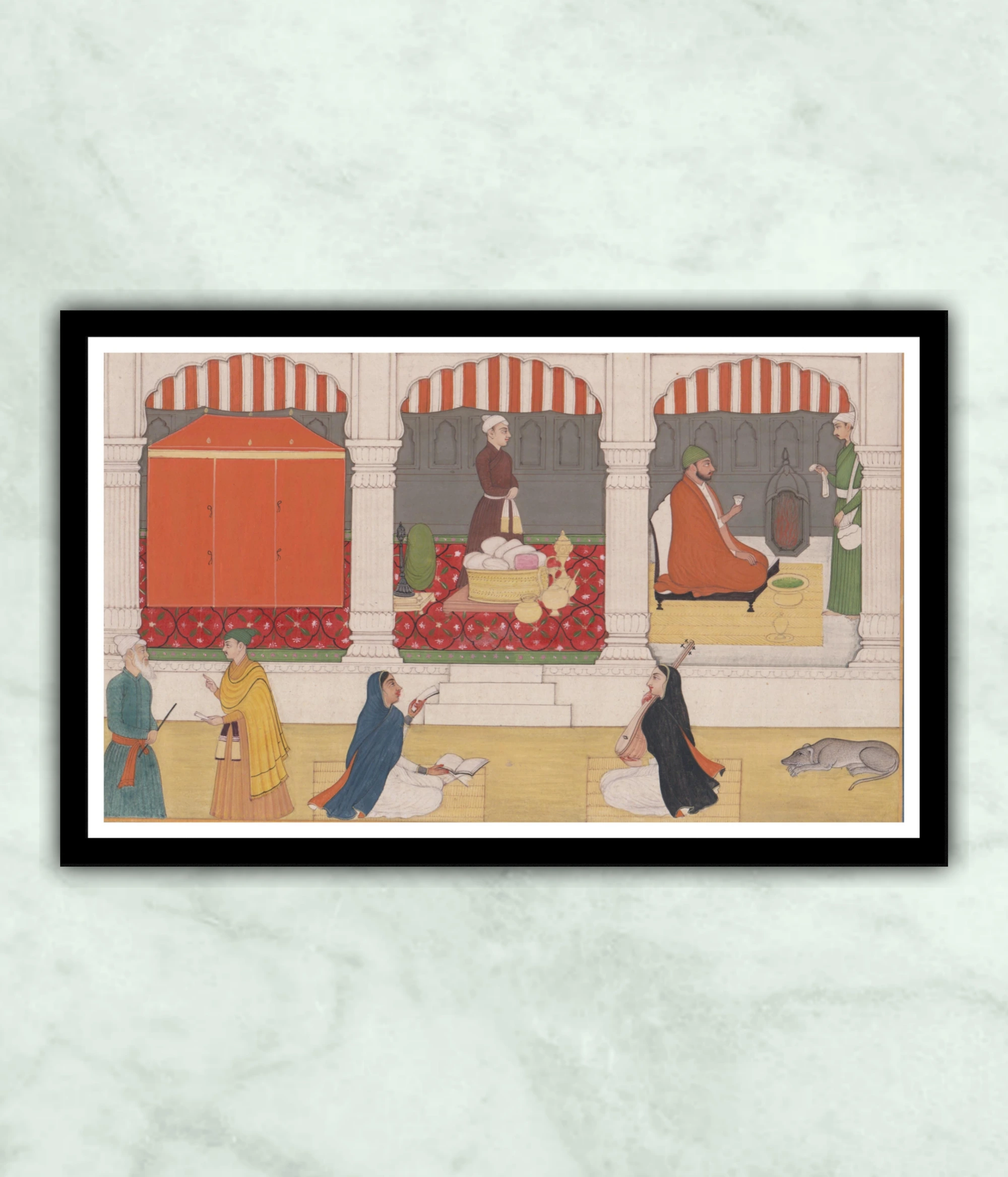
- Radha and Krishna and scenes from the Gita Govinda and Bhagavata Purana. Browse Radha Krishna paintings and the Radha Krishna Pahari school painting.
- Nayikas, the heroines of Indian poetry, waiting for or meeting their beloved.
- Baramasa, the twelve months and their moods.
- Ragamala, paintings of musical modes.
Bringing a Pahari painting home
Pahari miniatures are small and detailed, so hang them at eye level where they can be seen up close, in soft light and away from direct sun. Hand-painted works with stone colours and gold have a depth and glow that prints cannot match. Explore all traditional Indian painting styles, read about Mughal miniature painting, which influenced the hill artists, or see the types of Indian paintings.

How Pahari painting began and spread
Painting in the hill states grew from the late 17th century, as local rulers in the Himalayan foothills began to commission illustrated manuscripts and portraits. The early Basohli style was bold and intense. During the 18th century, unsettled times on the plains, including the sack of Delhi by Nadir Shah in 1739, are often linked to artists moving into the hills, bringing Mughal naturalism with them. Families of painters travelled between courts, so the same family could shape the style of several kingdoms. This is why Pahari schools are related yet distinct.
The family of Pandit Seu, Manaku and Nainsukh
The most celebrated Pahari painters belonged to one family from Guler. Pandit Seu’s elder son Manaku painted in a powerful, earlier manner and is known for a famous Gita Govinda series. His younger son Nainsukh developed a gentle, observant naturalism, and his paintings of Raja Balwant Singh of Jasrota show the ruler in everyday moments: listening to music, writing, smoking a hookah or watching the rain. The next generation of this family carried the style to many courts and is closely linked to the flowering of Kangra painting.
Other Pahari schools worth knowing
- Chamba: a refined style with elegant figures and careful detail, closely connected with Guler painters.
- Mandi: known for its distinctive, sometimes bold and expressive treatment of figures and devotional subjects.
- Kullu: a vigorous folk-influenced style with strong colours.
- Garhwal: associated with the painter and poet Mola Ram, with graceful women and lyrical landscapes.
- Nurpur and Bilaspur: smaller centres with their own variations of Pahari themes.
Famous Pahari painting series
| Series | Theme | Associated style |
|---|---|---|
| Rasamanjari | Poetry about lovers and heroines | Basohli |
| Gita Govinda | Jayadeva’s poem of Radha and Krishna’s love | Guler and Kangra |
| Bhagavata Purana | Life and miracles of Krishna | Guler and Kangra |
| Baramasa | The twelve months and the moods of lovers | Kangra |
| Ragamala | Paintings of musical modes | Several hill schools |
Materials and techniques
Pahari artists worked on handmade paper with very fine brushes, using mineral and plant colours ground by hand. Basohli painters were famous for raised white dots to suggest pearls and for fragments of iridescent beetle wings to imitate emeralds. Kangra artists favoured delicate, cool tones built up in many thin layers, with flowing lines that give figures their grace. Gold was used for jewellery, borders and architecture. Our artists follow these traditional methods, using stone colours and, on many works, real gold.
Where to see Pahari paintings
Important collections can be seen at the Bhuri Singh Museum in Chamba, the Kangra Art Museum in Dharamshala, the Government Museum and Art Gallery in Chandigarh and the National Museum in New Delhi, as well as major international museums. Visiting them is the best way to appreciate how small and detailed these paintings are.
How to choose a Pahari painting
- For a calm, romantic mood: choose Kangra, with its soft colours and landscapes.
- For drama and strong colour: choose Basohli, with its bold backgrounds and intense eyes.
- For devotional spaces: Radha Krishna scenes from either style suit pooja rooms and quiet corners.
- Check the detail: look for fine, hand-painted lines in faces, jewellery and trees.
Timeline of Pahari painting
| Period | Milestone |
|---|---|
| Late 17th century | The bold Basohli style emerges in the Jammu hills, with famous Rasamanjari paintings. |
| Early to mid-18th century | Guler painters, including Manaku and Nainsukh, introduce softer colour and naturalism. |
| Mid-18th century | Nainsukh paints intimate court scenes for Raja Balwant Singh of Jasrota. |
| Late 18th to early 19th century | Kangra painting flowers under Raja Sansar Chand, with lyrical Gita Govinda and Bhagavata Purana sets. |
| 19th century | The style continues across many hill states and influences painting in the Punjab. |
Glossary of Pahari painting terms
- Pahari: “of the hills”, the name for the painting of the Himalayan hill kingdoms.
- Nayika: the heroine of Indian poetry, shown in many moods of love.
- Gita Govinda: Jayadeva’s 12th-century poem about Radha and Krishna, a favourite Pahari subject.
- Baramasa: paintings of the twelve months and how each season affects lovers.
- Ragamala: a “garland of ragas”, paintings of musical modes.
- Beetle wing: iridescent fragments used in Basohli painting to imitate emeralds in jewellery.
How to read a Pahari painting: symbols and colours
Pahari painters used a rich visual language that their patrons understood immediately. Once you know a few symbols, these paintings become even more meaningful:
- Blue-skinned Krishna: the colour of the monsoon sky and of the infinite, marking Krishna as divine.
- Dark clouds and lightning: longing and the season of love; in Kangra painting the monsoon often mirrors the feelings of separated lovers.
- Peacocks: the arrival of the rains, romance and Krishna himself, whose crown carries a peacock feather.
- Flowering trees and creepers: love in bloom; a creeper winding around a tree suggests lovers embracing.
- Lotus ponds: purity and beauty, and often the setting for Radha and Krishna’s meetings.
- Cows and the flute: Krishna as the cowherd of Vrindavan, calling the gopis with his music.
- The waiting heroine: a nayika at a doorway or under a tree, sometimes at night, expresses the different moods of love described in poetry.
Colour also sets the mood. Basohli’s hot reds and yellows convey passion and intensity, while Kangra’s cool greens and soft pinks feel tender and serene. When you choose a Pahari painting, think about which mood you want in your room.
Frequently asked questions
Pahari painting is the miniature painting tradition of the Himalayan hill kingdoms (Himachal Pradesh, Jammu and the Punjab hills), produced mainly from the late 17th to the 19th century.
Basohli, Guler and Kangra are the best known, along with Jammu, Chamba, Mandi and Kullu.
Basohli is earlier, bolder and more intense, with flat hot colours; Kangra is later, softer and more lyrical, with naturalistic landscapes and cool tones.
Pandit Seu and his sons Manaku and Nainsukh of Guler are the most celebrated, along with their descendants who shaped Kangra painting.
Kangra painting comes from the Kangra region of Himachal Pradesh.
Nainsukh was an 18th-century painter from the Guler family of Pandit Seu, celebrated for his intimate, naturalistic paintings of Raja Balwant Singh of Jasrota.
Bold primary colours, flat backgrounds, large expressive eyes, and raised white dots and beetle-wing fragments used to imitate pearls and emeralds.
Notable collections are at the Bhuri Singh Museum in Chamba, the Kangra Art Museum in Dharamshala, the Government Museum in Chandigarh and the National Museum in New Delhi.
